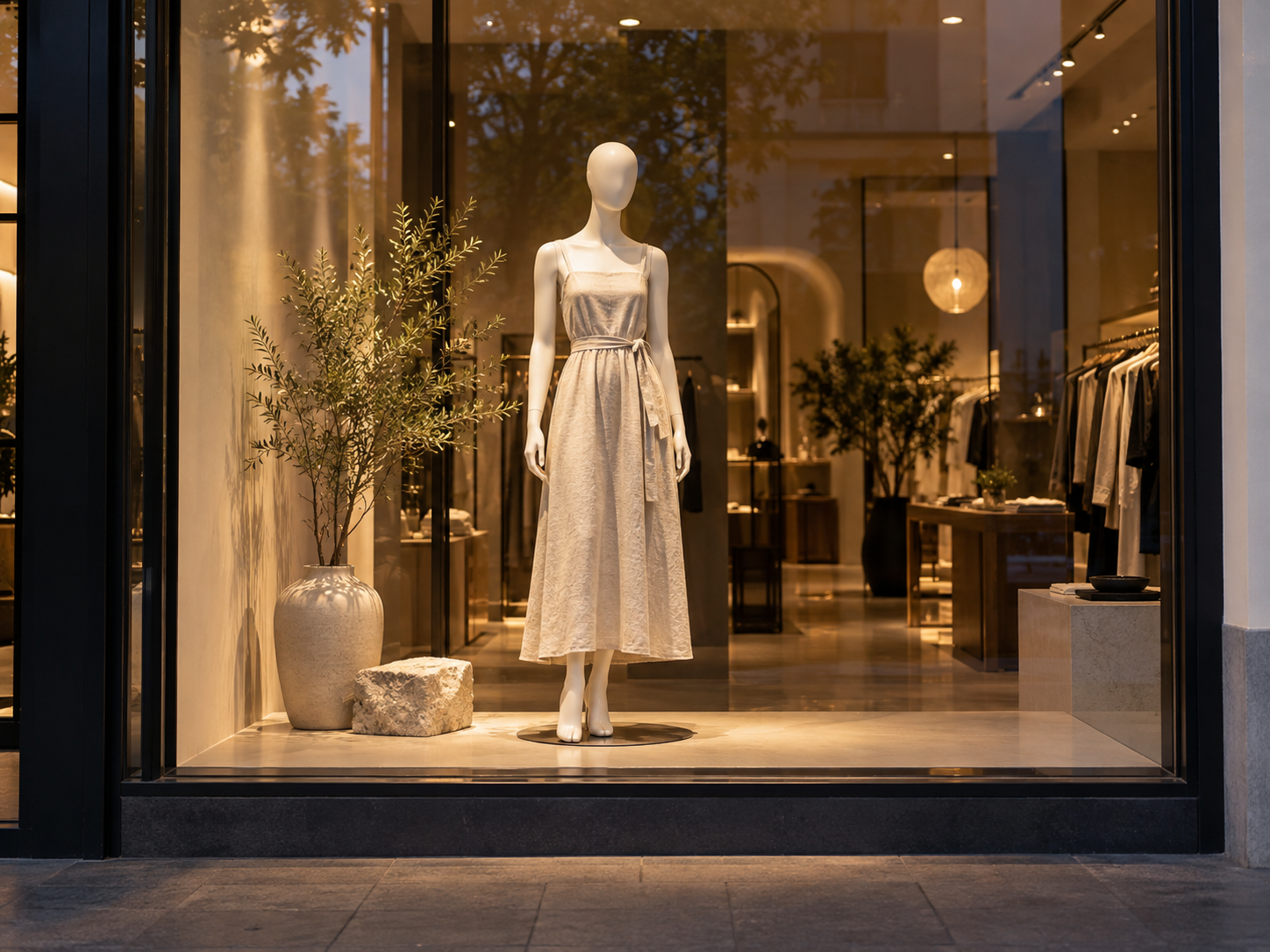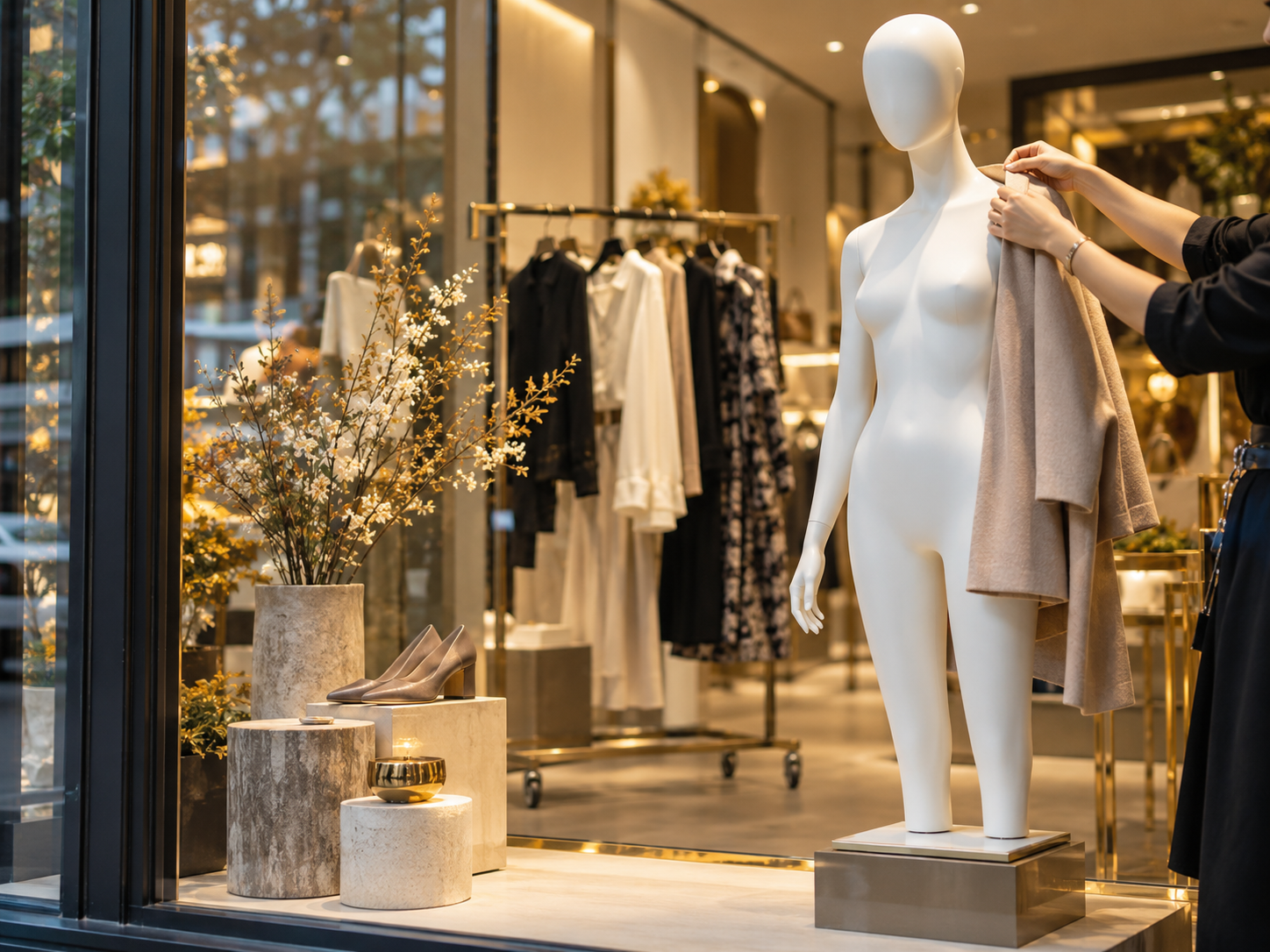
Editorial illustration.
Review your window display whenever the product story changes, and give it a regular date on the calendar so it does not drift. A two-to-four-week review cycle is a useful planning starting point, not a universal retail rule. Stock, campaign dates, presentation, and the people maintaining the window should decide what changes and when.
Separate a review from a full rebuild
A review means checking whether the display still makes sense. You may need to replace a sold-out garment, update a sign, clean the glass, or adjust one accessory. A full rebuild changes the main outfit, theme, or arrangement. Treating every review as a major installation can make an otherwise useful routine difficult to sustain.
Set both dates when planning a campaign: a regular review and the expected end of the main concept. Then agree what would trigger an earlier change. This gives staff permission to act on a specific issue without waiting for the whole window to be redesigned.
The aim is relevance and good presentation. Avoid assuming that a fixed number of weeks guarantees attention or sales. Your own window, stock, and customer behaviour provide more useful evidence than a universal timetable.
Know who the display is speaking to
Consider the people approaching your store and the decision you want the window to help them make. Are you introducing new arrivals, showing an outfit for an occasion, or explaining how several products work together? A display that answers one question clearly is easier to assess than one trying to advertise everything.
Also consider where those people see it. A mall walkway, an outdoor frontage, and a recessed entrance have different sightlines. View the display from the actual approach and check whether the featured product and sign can be understood there.
Use that same position during each review. It creates a consistent reference rather than judging the window only while standing inside it.
Let stock and dates drive urgent changes
A featured item that is no longer available needs a decision. You might replace it with a current alternative, change the outfit, or revise the message so the window reflects what the shop can actually offer. Do not leave the mismatch for staff to explain repeatedly to customers.
Campaign deadlines matter too. A display promoting an event or seasonal offer should have a clear end date, with replacement stock and signs prepared before that date arrives. Keep those dates in the same calendar as deliveries and staff availability.
Other changes are less urgent. A new colour option may justify a small update rather than a complete rebuild. Judge the scale of the work by what has changed in the product story.
Check the presentation before blaming the concept
Look for visible dust, garment creases, shifted accessories, inconsistent signs, and reflections that obscure the main product. Those are practical observations you can act on. Photograph the issue before adjusting it, then take another photograph from the same position.
Visual Merchandising: Tips, Types & Examples discusses space, lighting, and focal points. Use those ideas as questions for your own window: what is the main thing to look at, what competes with it, and can the garment be seen clearly?
You may find that moving a sign or removing a prop improves the display's clarity without replacing the whole concept. A tidy reset process should allow small corrections as well as ambitious new themes.
Build a changeover your team can repeat
Give each display a short brief with its main outfit, supporting items, fixture list, signs, and a reference photograph. Name the person responsible for approval and the people doing the changeover. Plan the work around the access and operating arrangements of your store or venue.
Prepare the next outfit before taking the current display apart. Confirm that the garments, mannequin parts, supports, and signage are ready. The time required depends on the actual installation; establish it from your team's own work rather than promising every reset can be done in minutes.
After the change, photograph the finished display and note anything that made the process awkward. A missing fitting or difficult garment change is useful information for the next brief.
Measure a question instead of inventing a result
Choose one question for a display trial. For example, does the new arrangement make customers ask about the featured jacket, or can they identify the outfit's main item more readily? Keep a simple staff observation record over a defined period.
If you track enquiries or sales, note other changes such as promotions, stock availability, or unusual foot traffic. A different result after a new display does not establish that the window alone caused it. Treat the record as information for your next decision, not proof of a guaranteed formula.
Compare photographs as well. They can reveal repeated layouts, unnecessary clutter, or whether the product you intended to feature is consistently visible.
Use a schedule with room for judgement
For a new boutique, start with a fortnightly review and a planned campaign change when the stock story calls for it. For a short pop-up, review daily presentation and plan around the event's closing date. These are example workflows, not industry benchmarks.
Compare relevant options for this display
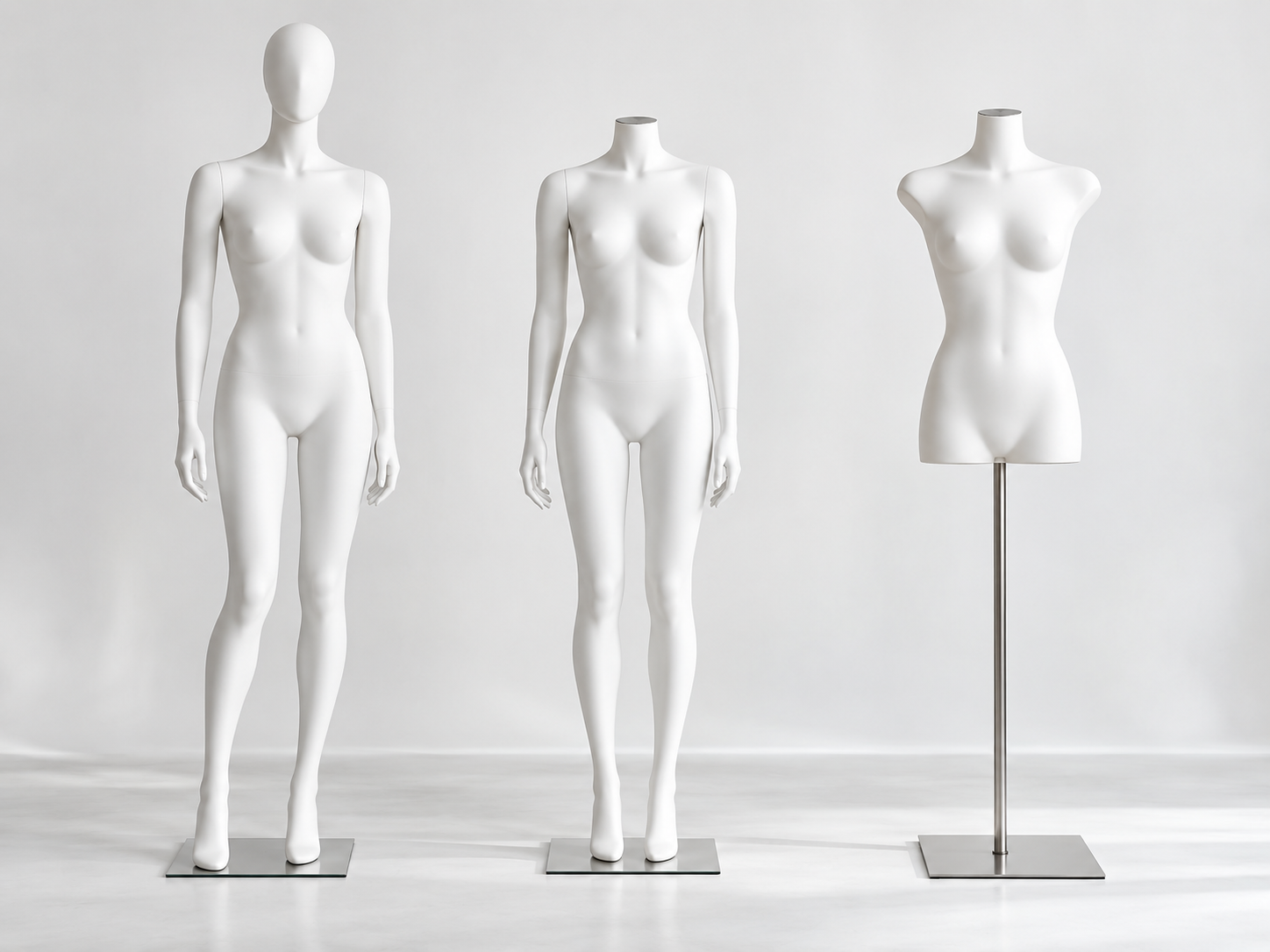
Our female full-body mannequin rental listing gives you standing-pose options to discuss for an outfit-led campaign. Confirm the actual pose and how it is dressed before planning a frequent change around it. Do not assume that every figure takes the same time to handle.
For a garment-led arrangement, our white female torso dress form rental is listed for showing tops and accessories. A torso is worth considering when the upper garment is the main message. Its height, support and supplied configuration still need to fit the place you intend to use it.
| Current option | Check for your display |
|---|---|
| Female Full-Body Mannequin Rental — Standing Poses | Complete outfit: confirm the pose, garment fit and dressed footprint. |
| White Female Torso Dress Form Rental | Upper garment or accessory: confirm the surface, stand and supplied parts. |
Questions before you decide
Should I change the entire window every two weeks?
Set a practical review schedule around your collection and campaign, then change the parts that no longer serve the message.
How do I know whether a new display worked?
Use the measurements your shop can actually collect, such as relevant enquiries or visits to the featured products, and record the dates of the change. A photograph or a longer viewing time alone does not establish additional sales.
The useful rhythm is one your team can maintain. Keep the display accurate, make corrections promptly, and use each change to learn what deserves attention in the next window.
Turn your shortlist into a quote
Send the relevant product codes and quantities with your location, required dates and any delivery or collection requirements. Ask what the quoted selection includes before confirming.
Use our contact page to ask about the product or rental you’re considering before you decide.