Editorial illustration.
Choose hangers by the garments they need to support, then create a consistent system for each rail. Shoulder fit, fabric, weight, grip, and the way customers handle the stock matter more than buying one attractive style for everything. A good hanger plan should help both presentation and the daily work of rehanging clothes.
Start with a garment audit
Separate your range into practical groups: structured jackets, light shirts and dresses, trousers and skirts, and garments with special care instructions. Look at representative pieces rather than judging from the category name alone. Two dresses can need different support if their weight, neckline, or fabric differs.
For each group, note the garment's shoulder shape, tendency to slip, and handling requirements. Check its care label where hanging or storage instructions are relevant. Decide who will replenish the rail and how the customer will remove and return the garment.
That audit gives you a shortlist of hanger types to compare. It also shows where one consistent style is useful and where a garment-specific exception deserves its own clearly organised rail.
Match the shoulder before choosing the finish
A hanger should suit the garment's dimensions as well as its appearance. Hanger Sizing Help Page explains matching hanger width to jacket shoulders and measuring the garment across its back. Treat its model recommendations as specific to that range, but use the measurement question when assessing your own options.
Check where the ends of a sample hanger sit inside the garment. Inspect the shoulder line when it hangs, and compare the result with the garment's intended shape. Do not assume that one adult size suits every shirt, jacket, or dress in your shop.
For a mixed-size range, decide whether you need different hanger widths and how staff will distinguish them. A simple label or organised spare box is more useful than discovering the difference while restocking a busy rail.
Compare wooden hangers for structured clothing
Wooden hangers can be a suitable option for tailoring and outerwear, but the material alone does not establish the right support. Look at shoulder width and contour, the actual hanger's dimensions, its intended load, and any bar or fittings the garment needs.
Compare a sample with your own jacket or coat. Check the shoulder line, the way the garment opens for browsing, and whether the hanger fits your rail. Ask about the surface finish and care instructions if marks or delicate fabrics are a concern.
Also assess spacing. A thicker hanger may occupy more room than a slim alternative, but there is no useful universal capacity multiplier. Test the actual garments and hangers on the rail you intend to use.
Use velvet where grip serves the garment
A flocked or velvet surface may be worth considering for garments that slip from a smoother hanger. Test the actual neckline, straps, and fabric with the selected model. Grip is useful only if the garment can also be placed on and removed from the hanger without unnecessary dragging.
Our care recommendation is to reserve velvet hangers for dry clothing. Can You Hang Wet Clothes on Velvet Hangers? similarly advises dry use unless the manufacturer specifically approves wet use. Keep drying equipment and storage hangers as separate decisions.
Inspect the flocked surface during normal housekeeping. If it is visibly damaged or leaving residue, remove that hanger from the rail and ask the supplier about the exact item rather than treating every velvet hanger as equivalent.
Compare three garments, not just three materials
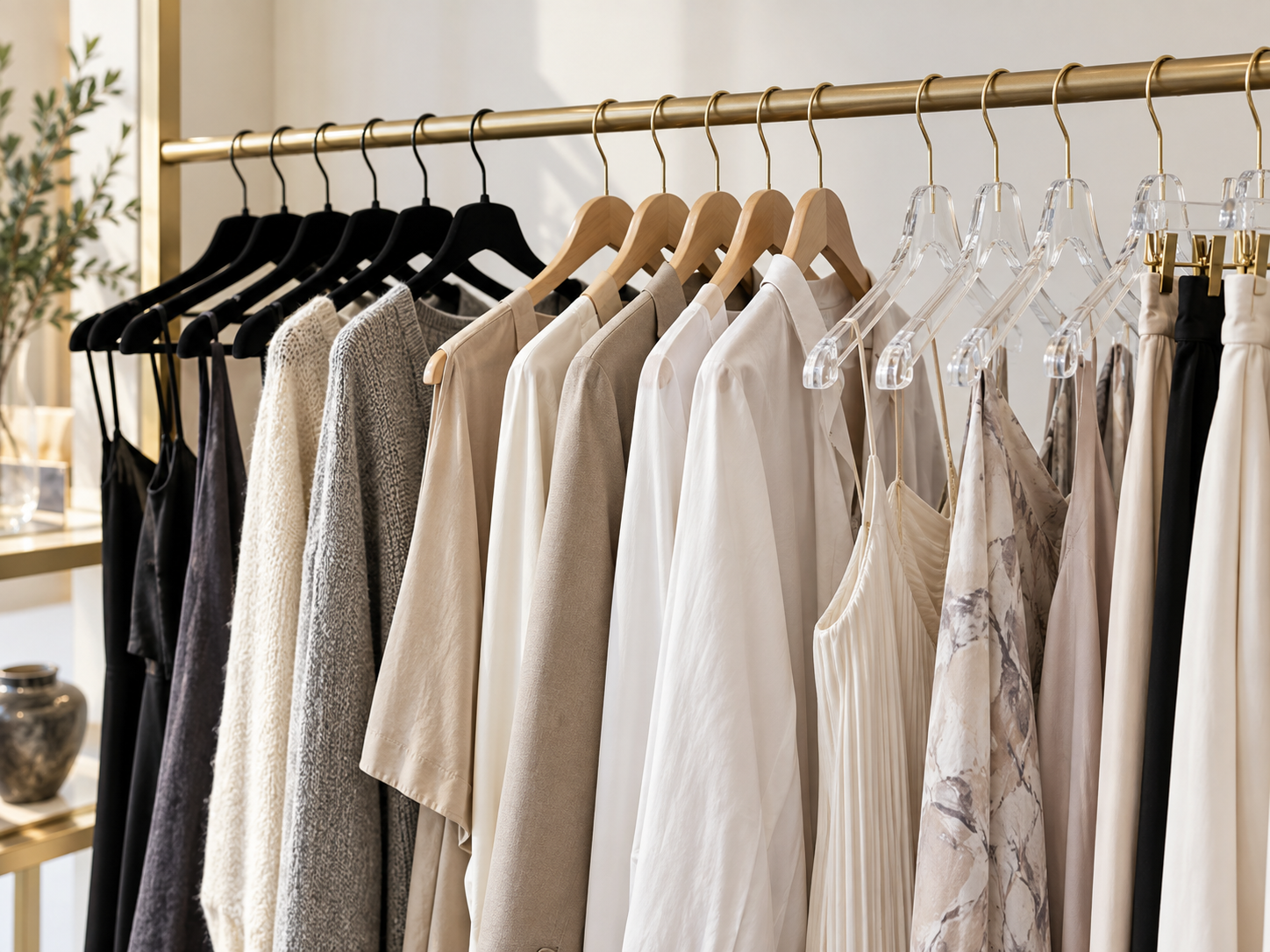
Put a jacket, a strappy dress, and trousers beside your shortlist. For the jacket, start with shoulder fit and contour. Asia Mannequin's HC011W wooden hanger has contoured shoulders and rubber strips on both arms, but no trouser bar. That construction gives you specific features to test; it does not make the hanger suitable for every jacket or a complete two-piece outfit.
For the dress, compare how the straps sit on the selected hanger and how easily someone can lift them off. A textured surface or suitable shoulder detail may help placement, but a hanger that catches the neckline or requires forceful removal is a poor match. Test both hanging and taking down the dress.
For trousers, decide whether you want the waistband visible or the garment folded over a lower bar. The HCP002 two-clip hanger uses clips on a flat bar, rather than garment shoulders. Check clip placement and inspect the fabric after a sample trial. Use a bar design where that presentation better suits the garment and its care instructions.
This comparison also makes spacing tangible. Hang the three garments on the intended rail, leave room to browse, and count the quantity that actually fits. Choose a consistent finish within each functional group after these checks.
Build a rail system staff can maintain
Keep compatible styles together, face hooks consistently, and leave enough space for the actual browsing and rehanging process. Test that process with a representative rail. Can someone remove a garment, compare it, and return it without disturbing several neighbouring pieces?
Store spare hangers by type and size, and make the system part of the restocking instructions. Identify what should happen when a style runs short, so temporary substitutions do not become an unexplained mix.
For example, a boutique could use one suitable style for its tailored jackets and a different, consistent style for light dresses. That is an intentional functional difference, not a failure to make every hanger identical.
Test before ordering the full quantity
Compare samples with the garments, rails, and people who will use them. Record the chosen width, design, finish, care requirements, and quantity. Include any garment groups that still need a different solution.
Compare relevant options for this display
The HVE006 black velvet hanger is described as a slim, non-slip design with a bar, rounded dip and steel hook. That combination gives you a different profile and surface from the wide-shoulder option. If you’re ordering for a mixed rail, identify which garments need which support before deciding the quantities.
| Current option | Check for your display |
|---|---|
| Wooden Hanger, Natural, Rubber Strips — HC011W | Jacket shoulders: compare the contour and width with your actual garment; this model has no trouser bar. |
| Trouser and Skirt Hanger, Black, Two Clips — HCP002 | Trousers or skirts: compare clip placement with the garment and its care instructions. |
| Velvet Clothes Hanger, Black, Non-Slip, w/ Bar (1 pc) — HVE006 | Light clothing: compare shoulder fit, neckline and bar arrangement; confirm intended use. |
Questions before you decide
Will velvet hangers damage or shed onto my clothes?
A non-slip description is not a universal no-shedding or colour-transfer guarantee. Inspect the actual hanger and ask about the selected product if you’re displaying pale or delicate fabric. Set aside a damaged or visibly shedding hanger rather than putting it straight into service.
Can I use the same hangers for drying laundry?
Ask whether the selected hanger is intended for wet garments, and follow the garment’s own drying instructions. A display or storage listing should not be treated as approval for laundry use.
Send that information with your enquiry. The useful outcome is a repeatable hanger system that supports the clothing and makes the rail manageable, with presentation decisions built on fit rather than unsupported claims about what a hanger will make customers buy.
Turn your shortlist into a quote
Send the relevant product codes and quantities with your location, required dates and any delivery or collection requirements. Ask what the quoted selection includes before confirming.
Use our contact page to ask about the product or rental you’re considering before you decide.