Editorial illustration.
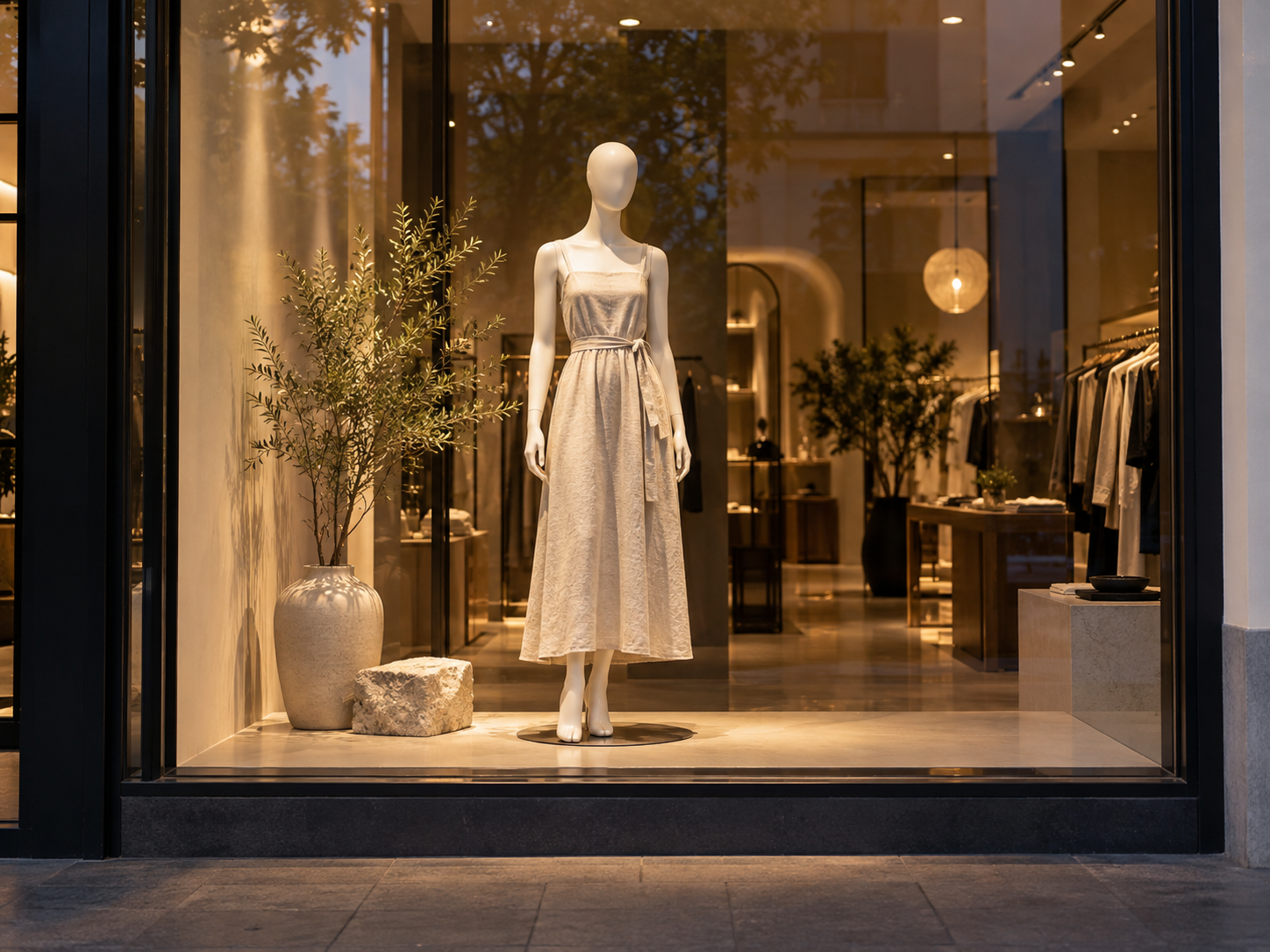
A small boutique window needs a mannequin that makes the outfit easy to read without taking over the space. Start with the garment, the usable window dimensions, and the person who will change the display. Those three decisions give you a much better shortlist than choosing a striking pose from a catalogue.
Decide what the window should explain
Before comparing figures, choose the outfit or product you want someone outside the shop to notice. A complete jacket, trousers, and shoes needs a different presentation from a blouse, scarf, or handbag. Write one sentence describing the display's job: show how a new jacket layers over a dress, introduce a colour collection, or make one occasion outfit easy to understand.
That sentence helps you edit the rest. If a second mannequin, prop, or sign does not support it, try the window without that addition. This is a planning recommendation rather than a promise of higher sales. The useful test is whether someone can understand the display from the pavement without studying every object.
Measure the space the display can actually use
Record width, depth, and height to the lowest sign, light fitting, or other obstruction. Include the base, the outfit, and any projecting arms in your plan. A figure's body measurements do not describe the complete occupied space once it is dressed and standing on its support.
Also check the route into the window. A display can fit its final position but be awkward to carry through a narrow door or access panel. Photograph the opening and the space behind it. Before ordering, ask for the selected mannequin's assembled dimensions and base dimensions, then compare those with your own measurements.
Leave yourself room to dress the figure and adjust the garment. An installation that fills every available centimetre may look possible on paper while being difficult to maintain. Use your actual access requirements rather than a universal clearance figure.
Choose a pose for the garment and the sightline
A straightforward standing pose is a useful starting point when space is tight. Compare it with a walking, seated, or more expressive figure only after you know what the garment needs to show. A coat may benefit from a visible sleeve and shoulder line; a narrow dress may need a clear view of its full silhouette.
Check the pose from the angles people approach the shop. The front view in a product photograph may differ from the view through your glass. A bent arm could obscure a neckline, while a step forward could compete with a sign. Sketch the arrangement or mark the base position before making the final choice.
For a display focused on an upper-body garment or accessory, consider whether a torso or half-body form would explain the product more directly. You do not need a full figure simply because the space is called a window.
Compare handling and finish, not just material names
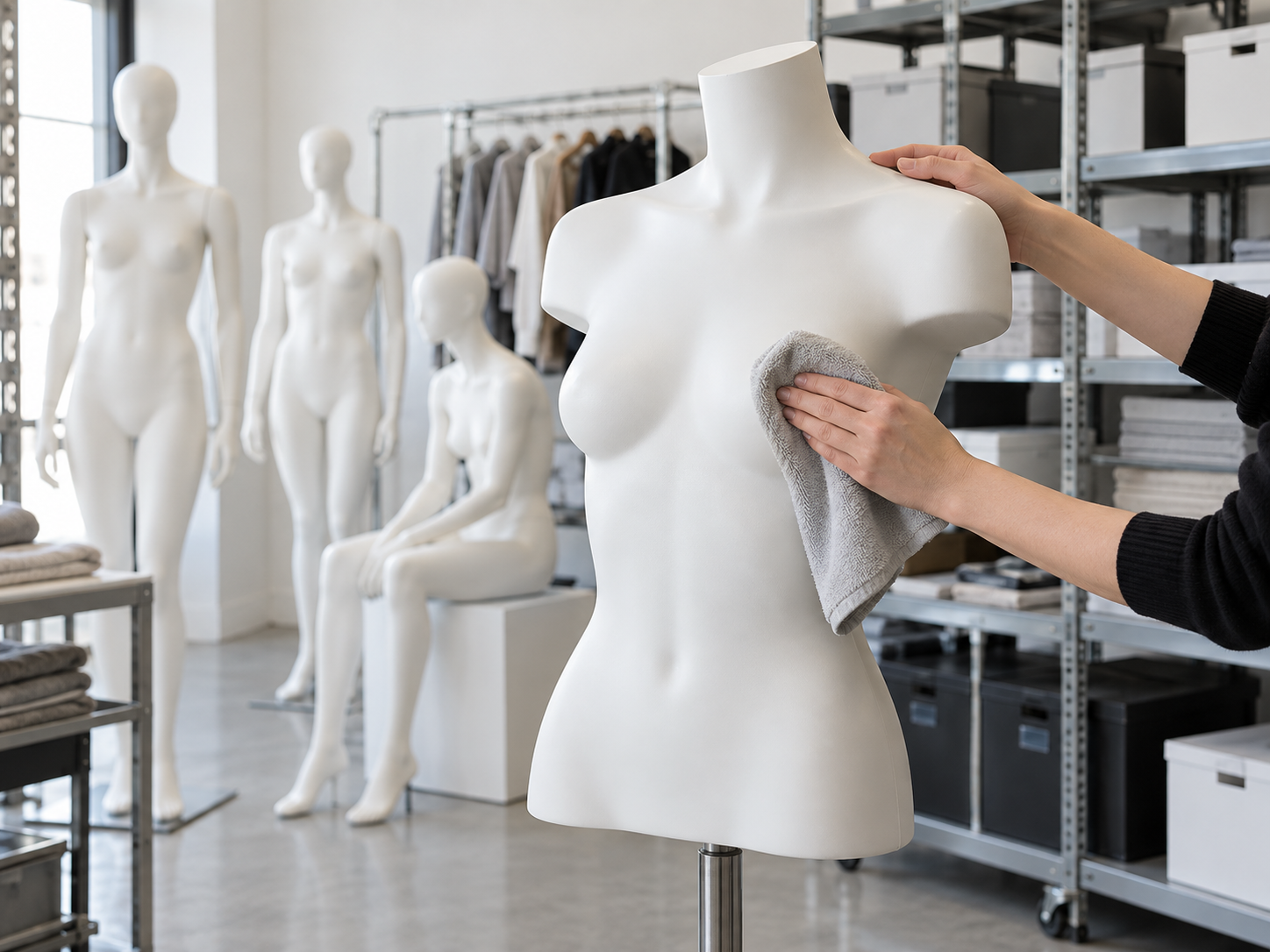
Ask about the actual model's weight, detachable parts, joints, and dressing method. Material labels alone do not tell you whether one person can manage the figure or whether its base suits your location. A lightweight model can still be awkward if its pose or fittings make garment changes difficult.
Compare the finish under lighting similar to your shop's. Matte, glossy, realistic, and fabric-covered surfaces create different visual effects, but the best choice depends on the clothes and the background. Photograph a sample with your intended garment if possible. Ask the supplier about cleaning and direct-light exposure for that finish instead of applying one care rule to every mannequin.
Plan who changes the display and when
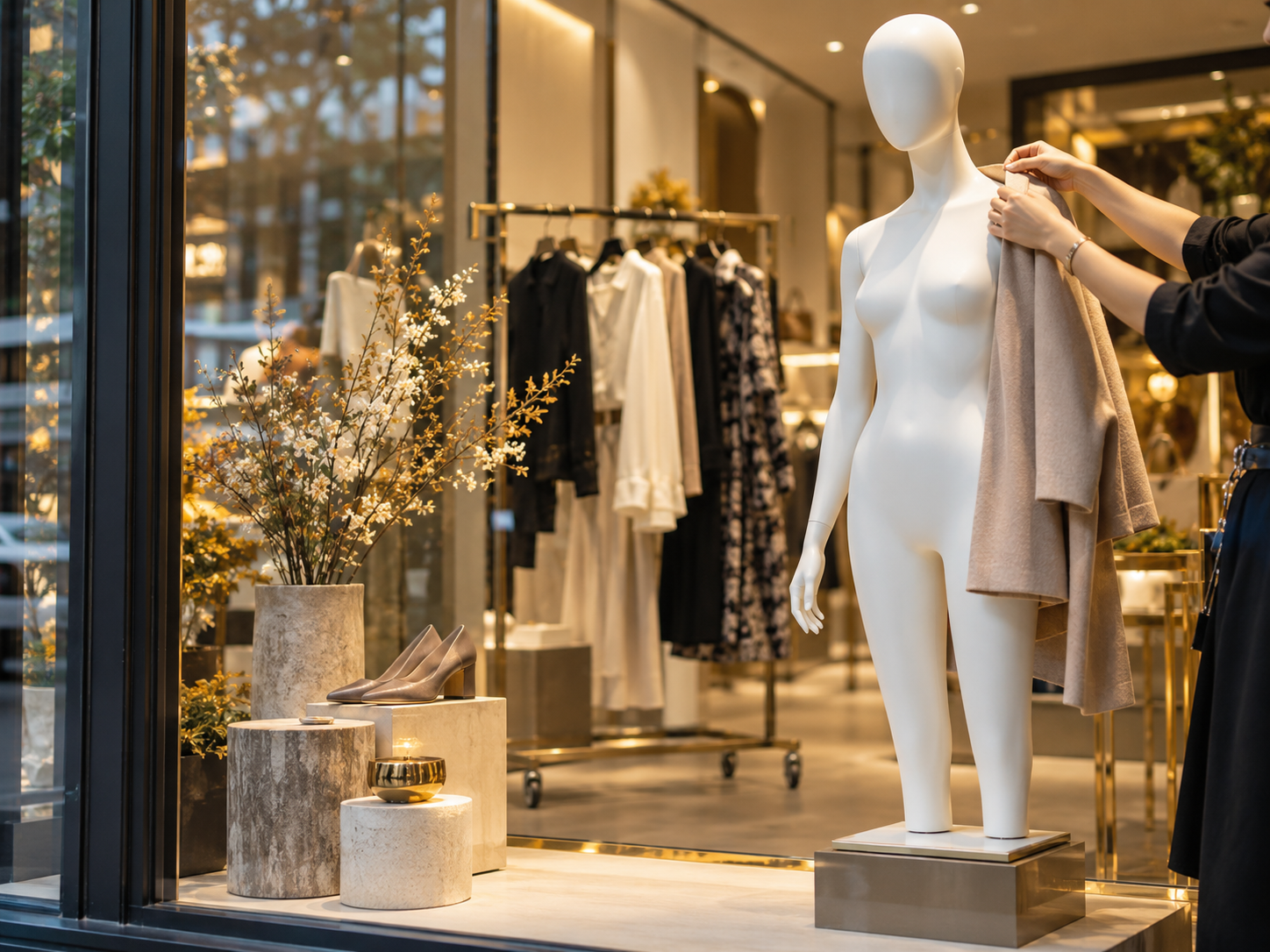
The person who restyles the window should help choose the figure. Ask them to explain the steps involved: removing accessories, dressing the torso, reconnecting parts, positioning the base, and checking the finished view. This makes handling part of the buying decision rather than a problem discovered after delivery.
Choose a review date for the display and identify what would trigger an earlier change, such as a sold-out featured item or new stock that belongs in the window. Keep the outfit plan and reference photograph where the team can find them. A manageable reset process gives your display a practical life beyond its first installation.
Work through one small-window example
Imagine a narrow boutique window introducing a jacket and matching skirt. Start with one figure wearing the complete look, a small product sign, and enough space to see the jacket's shape. Compare a straight pose with a turned pose using the actual outfit, rather than deciding which bare mannequin looks more dramatic.
If the sleeve disappears behind the figure, adjust the pose or placement. If the skirt is hidden by a prop, remove the prop before adding another display piece. If the same window is mainly promoting scarves next month, a smaller form may be more useful than keeping the full-body layout unchanged.
Send a brief that leads to a useful recommendation
Include your window measurements, access photographs, intended outfit, preferred finish, and expected reset frequency. Say whether you want to buy or rent, and give your installation dates where relevant. Ask which available models fit that brief, what their bases require, and how they are dressed.
Compare relevant options for this display
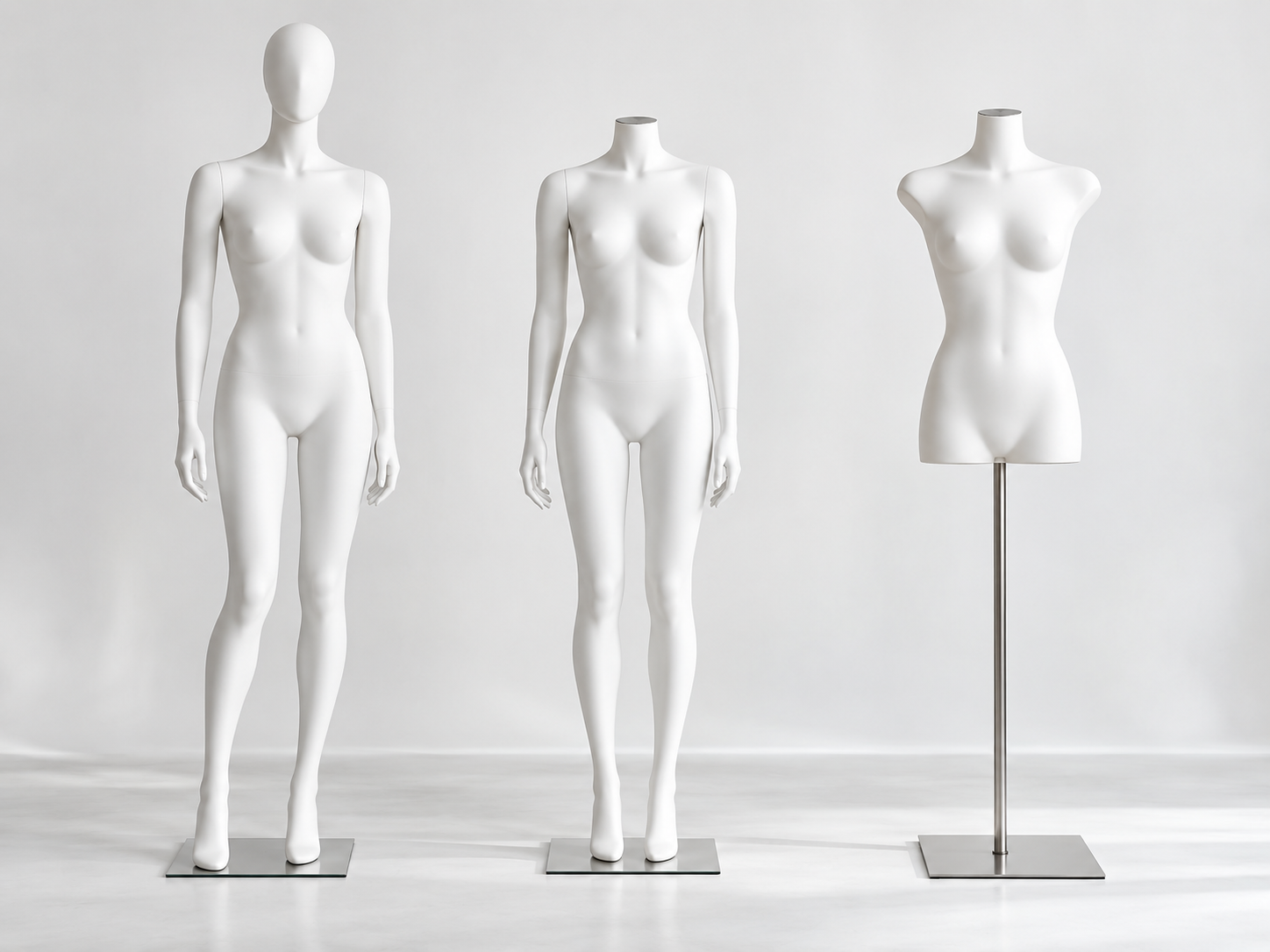
Our female full-body mannequin rental listing presents standing-pose options. It is a relevant starting point when the window needs a full-length garment or a coordinated outfit. The listing says not every pictured pose is guaranteed to be available, so identify the pose you need in the enquiry.
Our white female torso dress form rental is listed for showing tops and accessories. Consider it when the upper garment is the focus. Confirm the complete form-and-support dimensions before assuming a torso will take less usable space in your arrangement.
| Current option | Check for your display |
|---|---|
| Female Full-Body Mannequin Rental — Standing Poses | Complete outfit: confirm the pose, garment fit and dressed footprint. |
| White Female Torso Dress Form Rental | Upper garment or accessory: confirm the surface, stand and supplied parts. |
Questions before you decide
Will a seated or torso form always fit a small window?
No. A seated pose may need substantial depth, and a torso still needs its support. Ask for dimensions of the complete supplied configuration and compare them with the usable window.
What should I send with my quote request?
Send the window dimensions, the garments or outfit you intend to feature, the quantity and dates, plus the Singapore venue and access requirements. Include the exact product or pose you are considering.
The aim is a display your team can set up, understand, and maintain. A well-chosen mannequin supports the garment and the space together; its pose, finish, and handling should all serve that job.
Turn your shortlist into a quote
Send the relevant product codes and quantities with your location, required dates and any delivery or collection requirements. Ask what the quoted selection includes before confirming.
Use our contact page to ask about the product or rental you’re considering before you decide.