Editorial illustration.
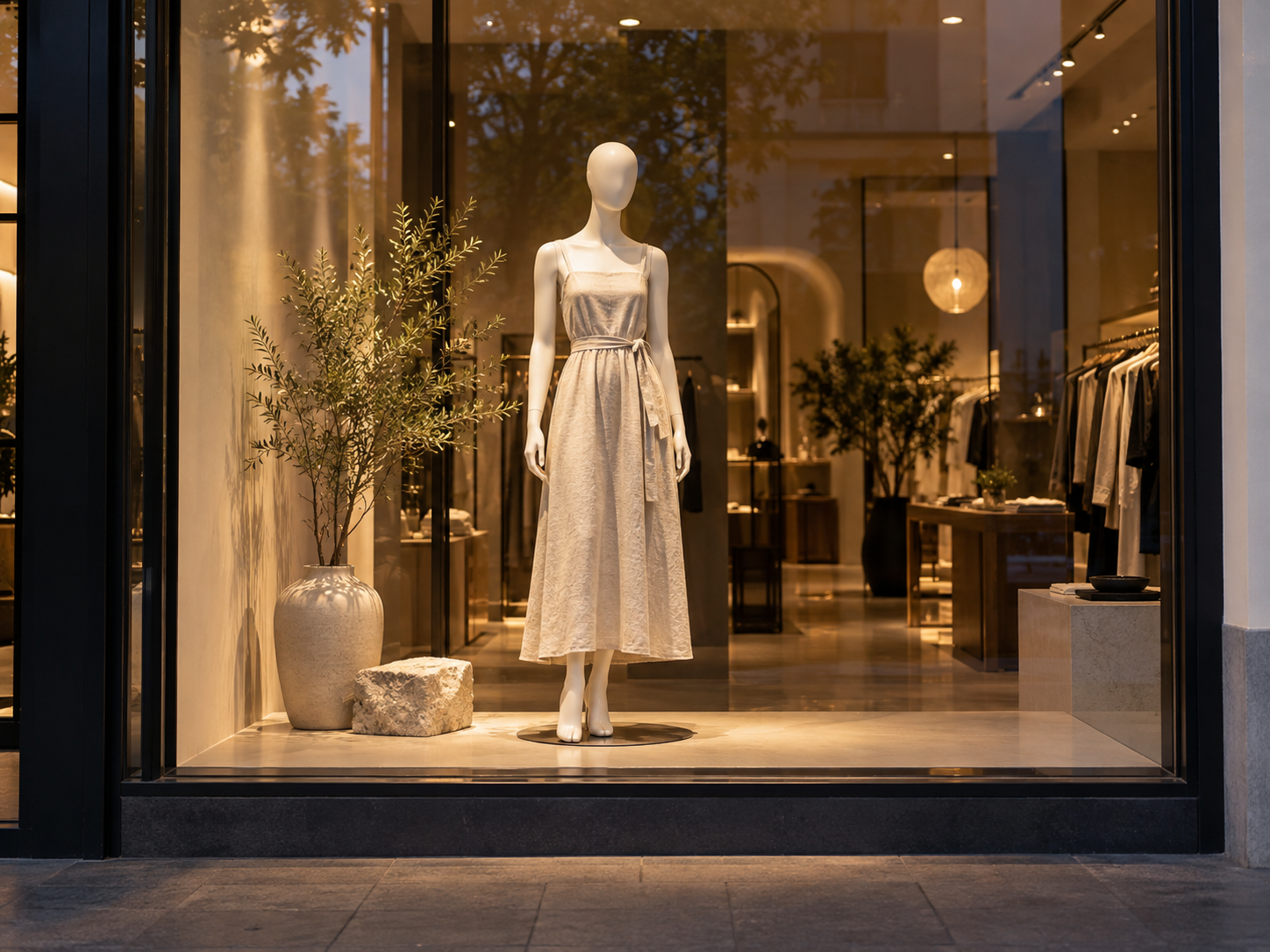
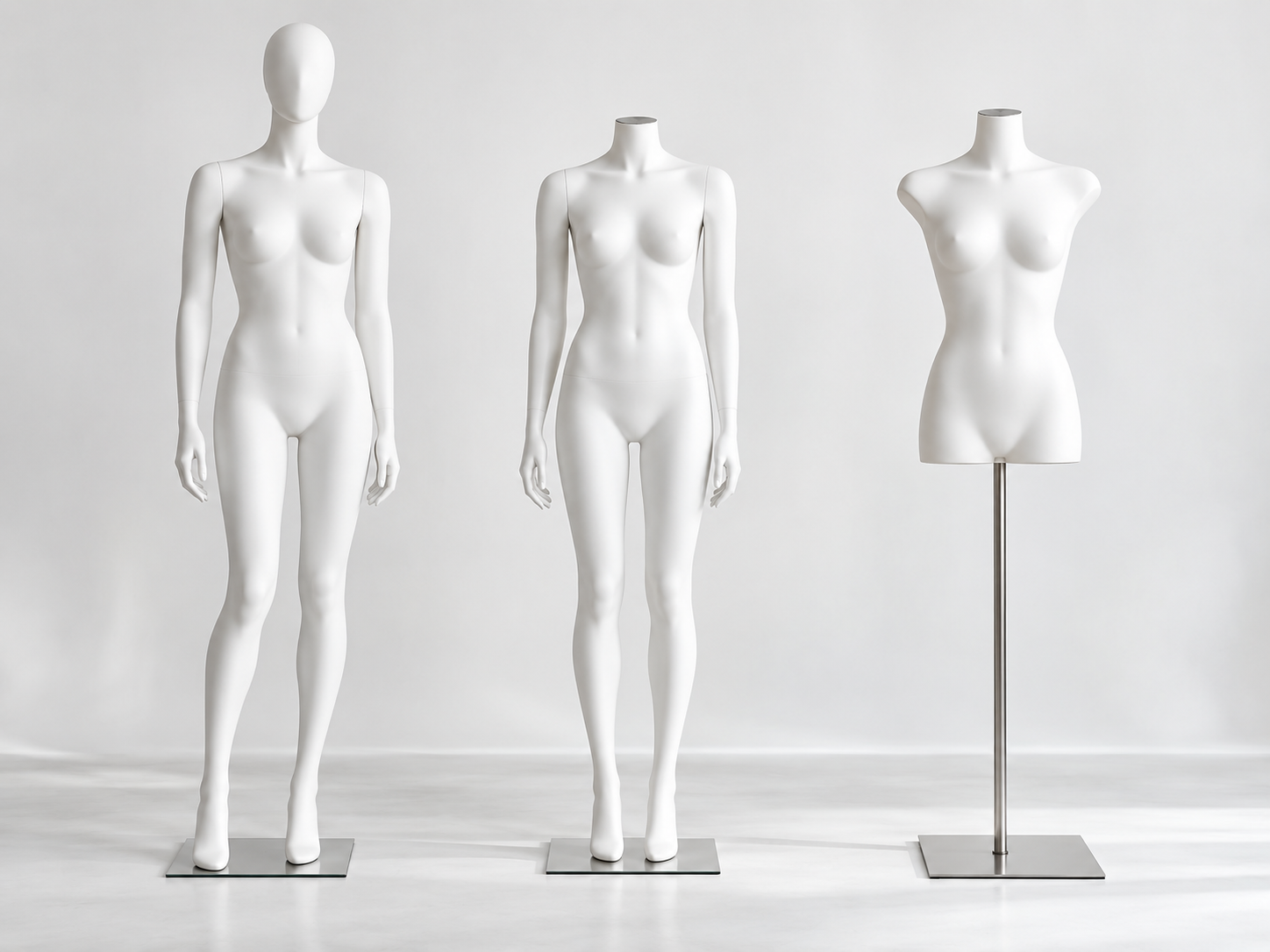
Choose a mannequin by how much of the outfit you need to show. A full-body figure supports a complete look, a headless figure offers a different visual focus, and a half-body or torso form suits a more concentrated display. The best format is the one that explains your product within the space and handling your team can manage.
Start with what the customer needs to see
Lay out the garment and accessories before choosing the figure. Are you explaining the relationship between a jacket, trousers, and shoes, or drawing attention to a blouse's neckline? Those are different display tasks. A complete silhouette may be useful for the first; a smaller form may be enough for the second.
Think about where the customer sees it. A shop window, a clothing rail, a counter, and an event booth offer different viewing angles and distances. The format should work from that position, not only from the angle used in a catalogue photograph.
Write a short display brief naming the main product, supporting pieces, location, and expected change frequency. Use it to compare models rather than treating every mannequin as an interchangeable clothes stand.
Full-body figures for a complete silhouette
A full-body mannequin allows you to present upper and lower garments together. Depending on the actual model and support, it may also accommodate footwear and accessories. Check those details with the supplier rather than assuming every figure accepts the same shoe or fixing arrangement.
This format is worth considering when the proportions of the whole outfit matter. For example, a long coat and boots can be read as one look, while a jacket and wide trousers can show how the two shapes balance. The figure's stance becomes part of that explanation.
The trade-off is the assembled footprint and the dressing process. Measure the base and projecting limbs, and ask how the outfit is put on. A visually suitable mannequin still needs to fit the installation space and the access route your staff will use.
Headless figures for a different visual treatment
Headless describes the absence of a head, not a universal body shape or operating method. Some models retain arms and legs; others simplify different parts of the figure. Compare the exact design and its dimensions before deciding what the label means for your display.
Consider this format when you want the clothes' silhouette to remain prominent without choosing a facial expression or hairstyle. That is an aesthetic decision, rather than a guarantee that shoppers will respond in a particular way. Look at the dressed figure against your shop's background and lighting.
Do not assume that removing the head automatically makes dressing faster or maintenance cheaper. Those differences depend on joints, pose, finish, and the work you expect to do. Ask the person changing the display to compare the actual assembly steps.
Half-body and torso forms for a focused presentation
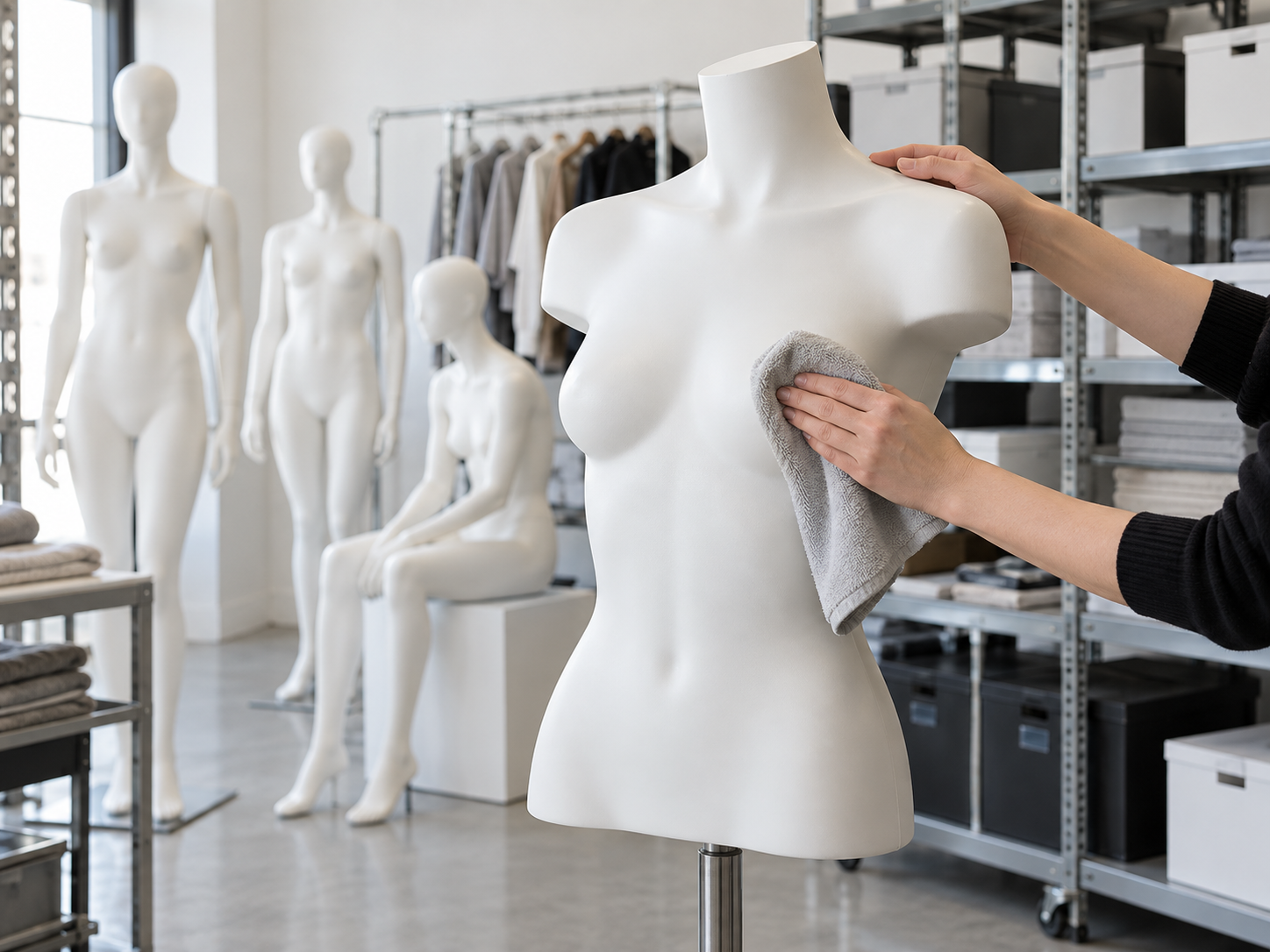
A torso or half-body form can concentrate the display on a shirt, jacket, scarf, or other upper-body item. Its usefulness depends on the part of the garment you want visible and the height and support of the actual model.
It may suit a counter, a small display area, or a position beside related stock. Check the base footprint even when the body itself is compact. A torso on a wide stand can still occupy a substantial amount of counter space, and a wall-mounted model requires its own intended installation arrangement.
Retail display torsos and dressmaking forms also serve different purposes. If the work involves pinning or garment fitting, confirm that the selected form is designed for it. Fabric covering alone does not establish that it is pinnable or suitable for sewing work.
Match format to the people doing the reset
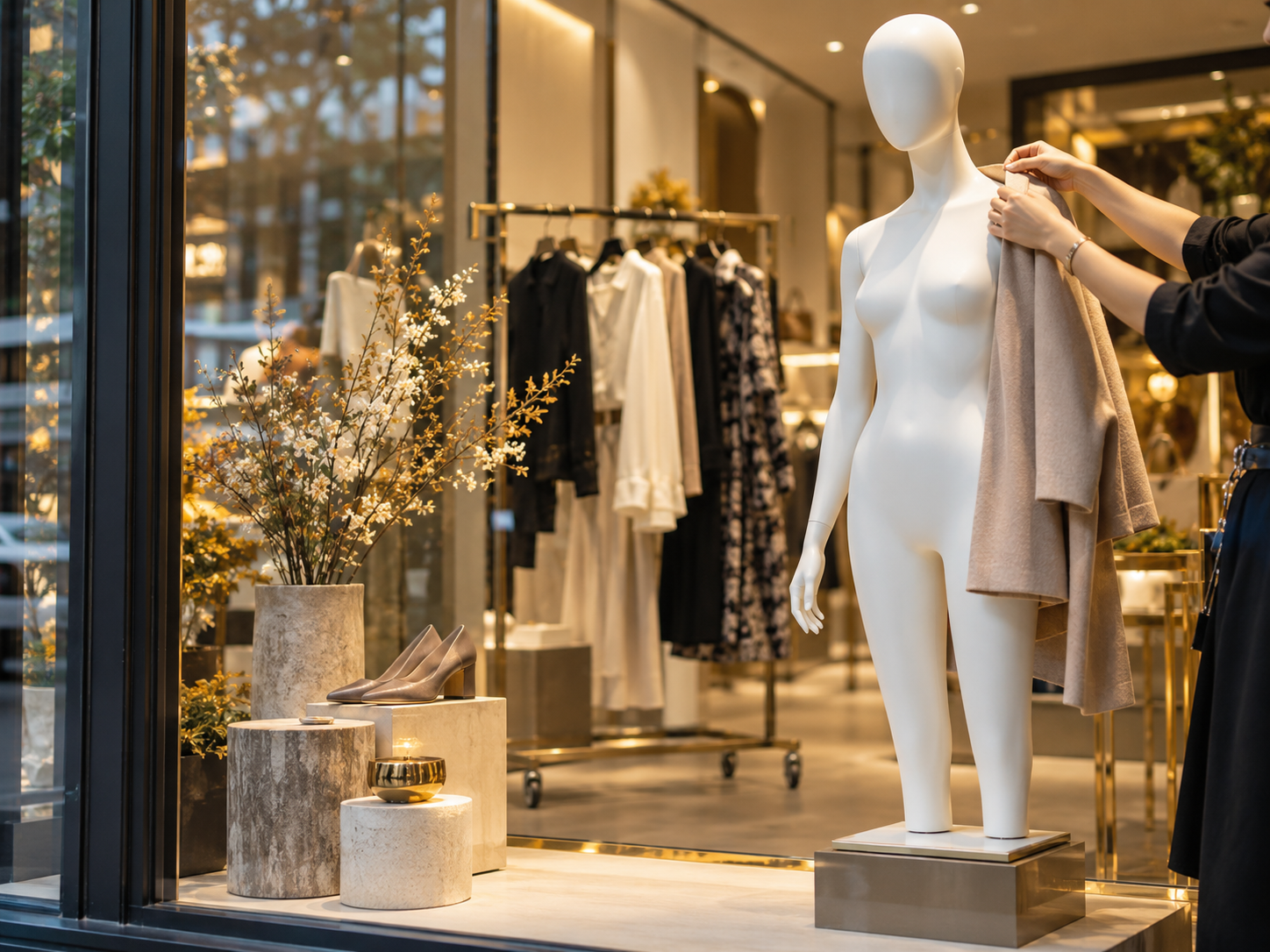
Ask who dresses the figures, where that work happens, and how often the display changes. A shop with planned campaign resets can approach handling differently from a team changing one featured garment during daily opening tasks.
Have the supplier explain the sequence for detaching and reconnecting parts. Check whether the intended garment can be dressed without forcing its openings or the mannequin's joints. Confirm how the support is attached and what tools, if any, the model requires.
Those questions give you an operational comparison. They are more useful than a general claim that one format is always easy and another always difficult.
Work through three display situations
Imagine a window promoting a complete occasion outfit. Compare full-body and headless full-body models using the same clothing, base position, and viewing angle. Decide whether the head contributes to the intended styling or adds an element you do not need.
For a small counter introducing a new shirt collection, compare a torso form with the available counter dimensions. Check that the shirt's hem and sleeves remain visible and that customers can reach the nearby stock.
For an event showing accessories, start with the accessories themselves. A necklace bust, dedicated stand, or smaller display form may serve the task more directly than a full figure. The most dramatic mannequin is not automatically the most useful fixture.
Make the final shortlist specific
Record the format, model dimensions, base, finish, dressing method, and garment measurements. Add photographs of the location and say whether you intend to rent or buy. Ask which available models meet that brief and what parts are included.
Compare relevant options for this display
Our female full-body mannequin rental listing presents standing-pose options. The current description says each shown pose is not guaranteed to be available. Pick the kind of pose your display needs, then confirm the actual model for the dates.
Our white headless female full-body mannequin rental is a full-body selection. It is relevant when you want to discuss a complete outfit on a headless figure. The absence of a head does not remove the need to check the body dimensions, pose, support and access to the display.
Our female half-body mannequin rental is described as a female half-body mannequin on a steel base. It provides a starting point for an upper-body display; male forms are separately priced items according to the listing.
| Current option | Check for your display |
|---|---|
| Female Full-Body Mannequin Rental — Standing Poses | Complete outfit: confirm the pose, garment fit and dressed footprint. |
| White Headless Female Full-Body Mannequin Rental | Headless full-body display: check dimensions, garment fit and support. |
| Female Half-Body Mannequin Rental — Steel Base | Half-body display: check the visible garment length, height and base. |
Questions before you decide
Does headless mean armless?
No. Specify both features if they matter. Read the actual listing and ask about the supplied configuration rather than treating head style as a statement about the arms.
Which type is easiest to dress?
It depends on the specific figure, the garment and how the parts are assembled. Ask about the selected model and your dressing routine. Choose around the assembly and dressing method your team will actually use.
Choose the format that makes the product understandable and the next reset manageable. That gives you a repeatable display decision rather than a collection of figures selected only for how they looked when empty.
Turn your shortlist into a quote
Send the relevant product codes and quantities with your location, required dates and any delivery or collection requirements. Ask what the quoted selection includes before confirming.
Use our contact page to ask about the product or rental you’re considering before you decide.