Editorial illustration.
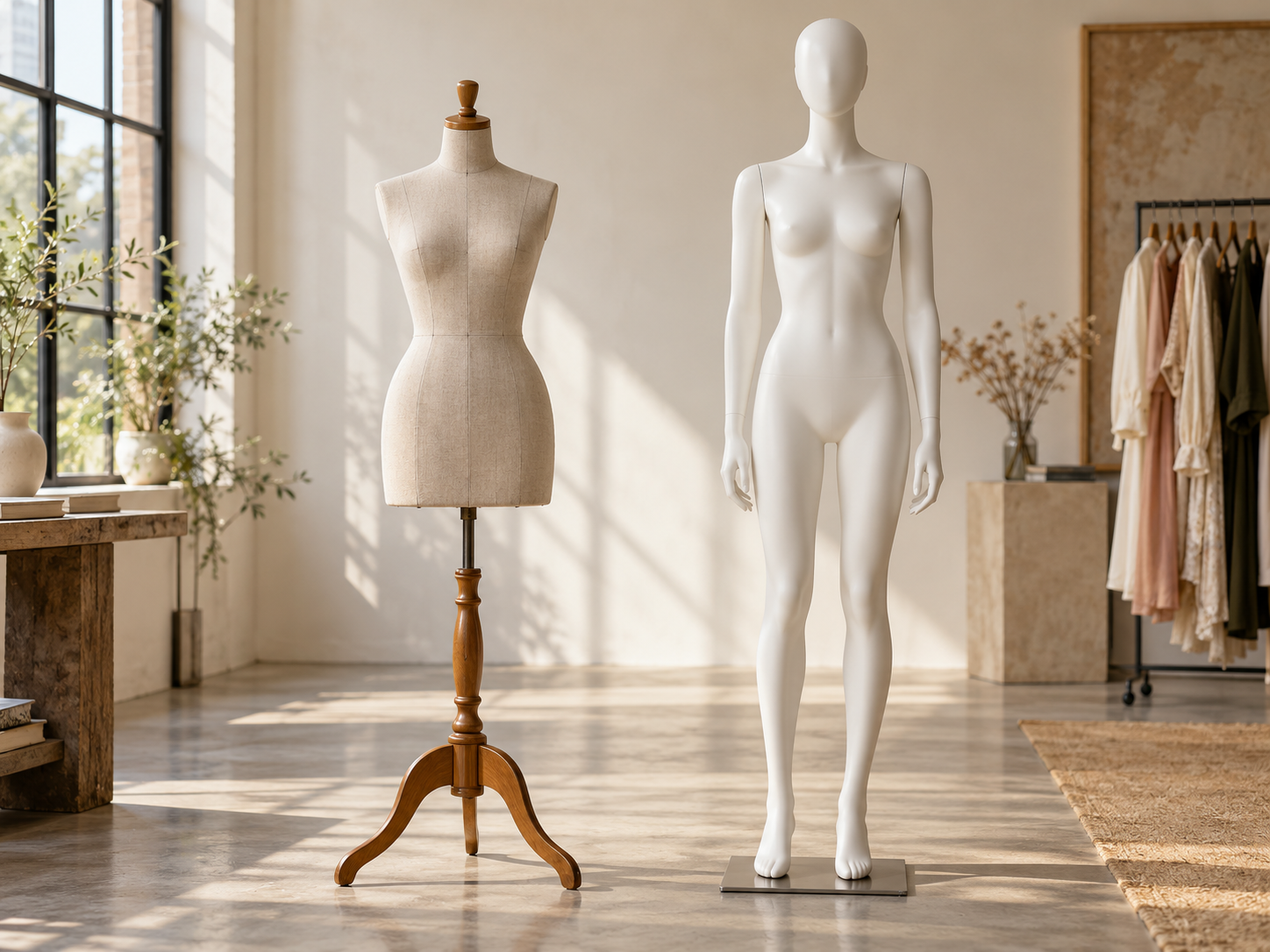
A mannequin and a dress form can both display clothing, but they answer different questions. Start with whether you need to show a complete outfit, present one garment, or carry out fitting and pinning work. Then compare the actual model's measurements, surface, stand, and handling method rather than choosing by its name alone.
Separate display work from dressmaking work
A retail display needs to make the garment understandable from the customer's viewing position. Dressmaking work may require adjustment, pinning, draping, or checking a particular fit. A form suitable for one job does not automatically meet the requirements of the other.
Be specific when you enquire. Say whether the form will stand in a shop, appear in catalogue photographs, or be used while making or altering garments. Identify the person using it and the garments they work with most often.
This distinction prevents a common specification mistake: treating every fabric-covered torso as a pinnable sewing form. Confirm the construction and intended use of the selected model before using pins or applying adjustments.
Choose a mannequin for the complete look
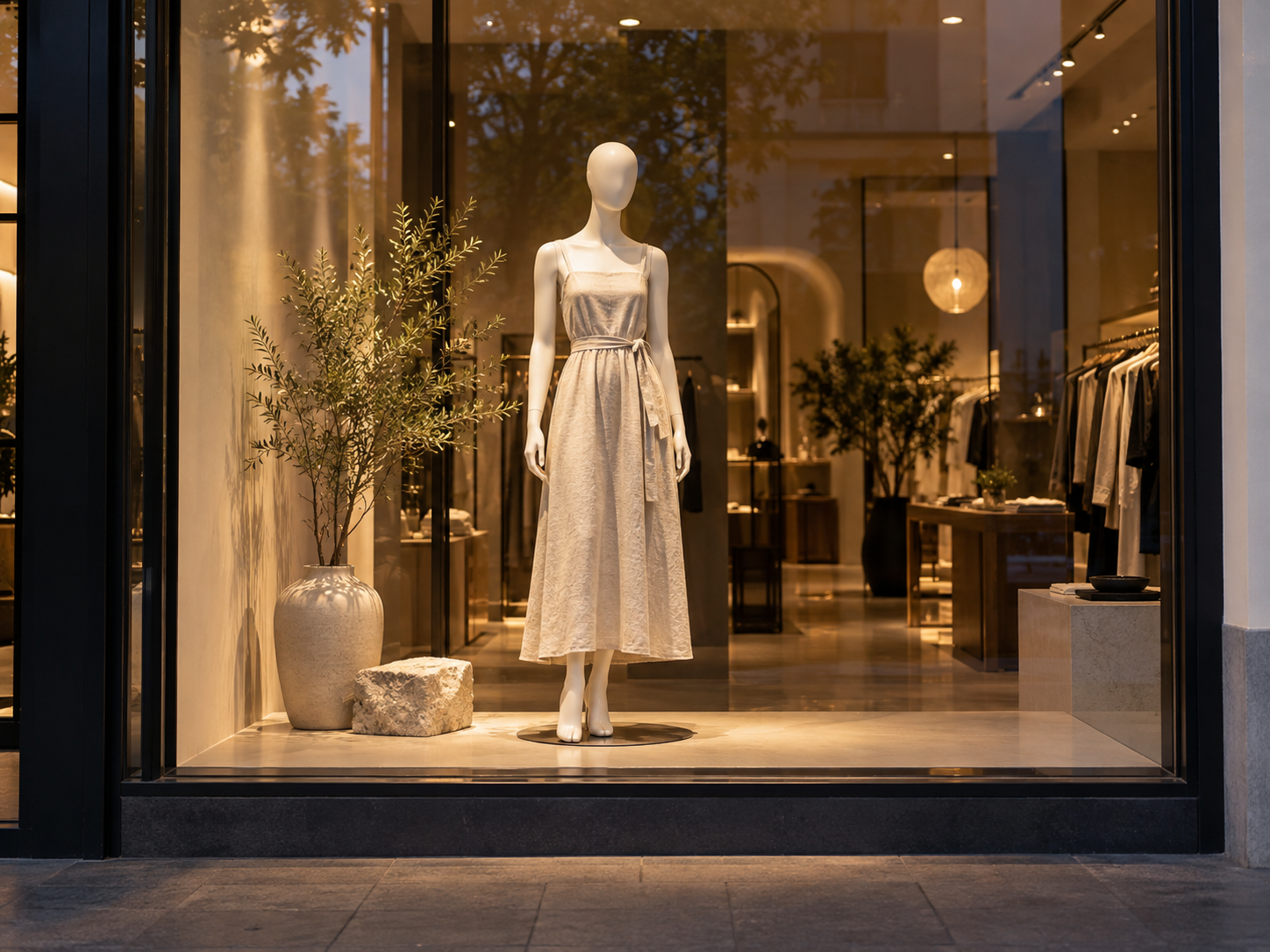
A full figure can show the relationship between upper and lower garments and, where the actual model permits it, footwear and accessories. Consider it when the display needs to explain the whole silhouette rather than one section of clothing.
For example, a window presenting a coat, trousers, and boots may benefit from seeing those proportions together. Compare the dressed model from the customer's approach, including its pose, base, and the space around it. A pose that looks interesting when empty can hide part of the outfit once dressed.
Ask how the model is assembled and how clothes are put on. Confirm support and footwear arrangements rather than assuming they are the same across every mannequin. The figure must fit both the visual task and the team's handling process.
Choose a torso form for a concentrated display
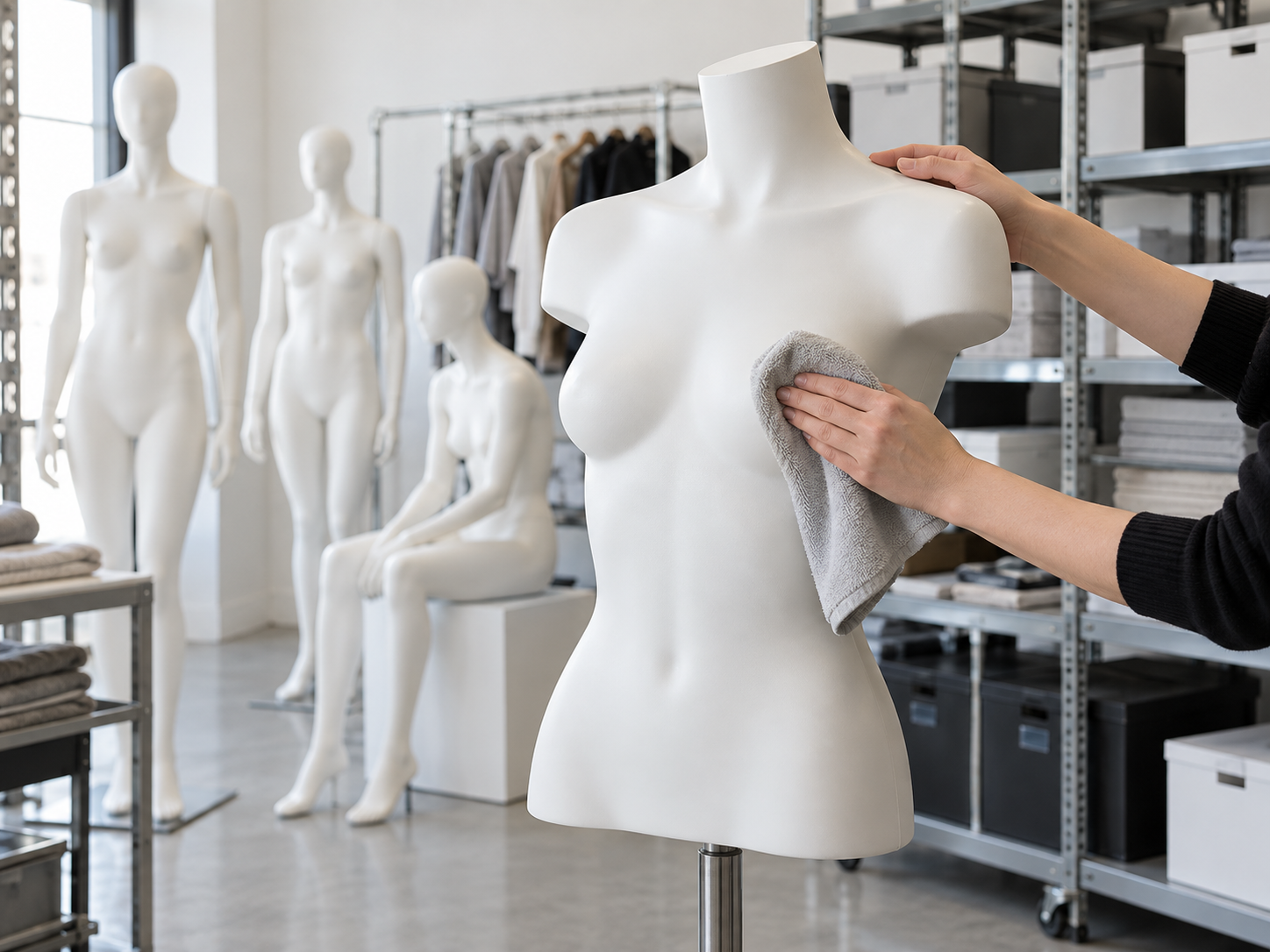
A torso form may suit a shirt, jacket, scarf, or other upper-body item when the full silhouette is unnecessary. It can also be useful beside a rail or counter where the display's job is to introduce one garment group.
Check its actual dimensions and stand. A compact body on a wide base can still take up substantial counter space. Height adjustment, stability, shoulder shape, and the part of the garment visible all depend on the model.
Some forms are designed for pinning and fitting. For instance, SINGER Adjustable Dress Form – Small/Medium has a foam-backed exterior that allows pinning. That is a documented property of that product, not evidence that every retail torso has the same construction. Ask for the specification of the form you are buying.
Compare measurements with the actual garments
Record the relevant bust, waist, hip, shoulder, and height measurements of the selected form or mannequin. Compare them with the garments you intend to display. Clothing size labels alone may not explain whether the shape and openings work for the task.
If fitting is part of the job, discuss the required measurements and adjustment range with the supplier. If the job is retail presentation, check the dressed appearance and the allowed methods for arranging the garment. Do not force a tight opening over a figure or use pins in an unapproved surface.
A sample garment is especially useful for this comparison. It turns questions about fit and dressing into something the supplier and your team can inspect together.
Plan photographs around the result you need
For product photography, decide which part of the garment must be visible and whether the figure itself should appear in the image. A torso may suit some upper-body photography; a full figure may suit a complete outfit. The right choice depends on the required shot, not a universal rule about which tool is faster.
Keep camera position, lighting, and garment arrangement consistent when comparing options. Photograph the same garment on each suitable model, then inspect the neckline, shoulder line, hem, and visible support.
If a particular photographic technique needs detachable sections or specialised access, specify that requirement before ordering. Do not assume an ordinary display form can provide a function it was not designed to perform.
Work through a shop-floor example
Imagine a boutique with one front window and a small interior rail introducing new shirts. The window needs a complete styled outfit; the interior position needs customers to see one shirt's shape beside the available stock.
Compare a mannequin for the window and a torso for the interior, but assess the costs, space, and actual usage before deciding to buy both. If the budget allows only one, choose the task that most needs the fixture now. A second purchase can wait until its job is clear.
Ask the staff member changing those displays to review both models. The dressing sequence and storage arrangements should fit the work they will actually do, without relying on a promise that every change takes a minute.
Make the enquiry about a task, not a category
Send garment measurements, photographs of the location, the intended display or fitting task, and any photographic requirements. Ask which models are suitable, what their surfaces permit, and what stand and parts are included.
Compare relevant options for this display
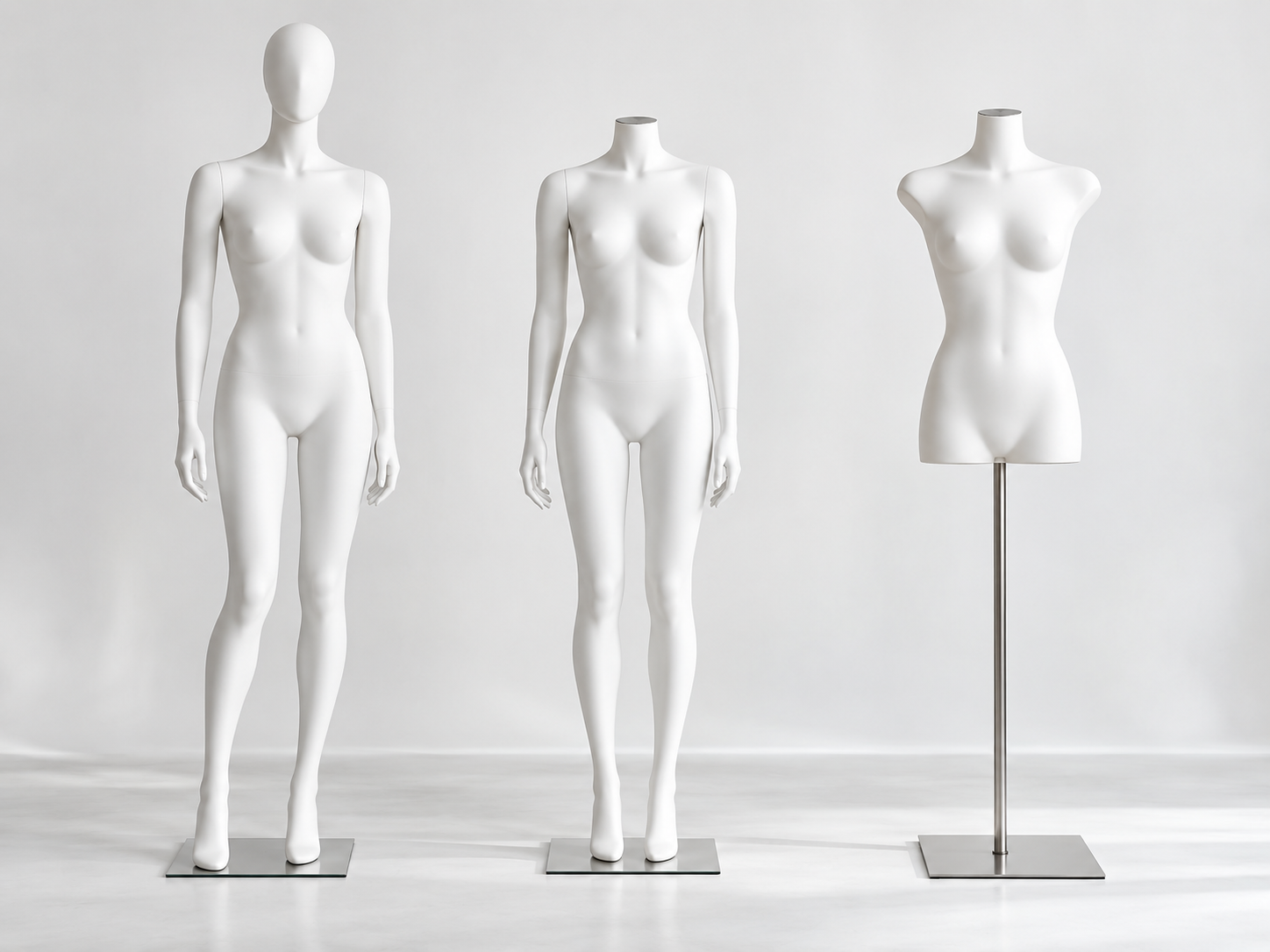
Our female full-body mannequin rental listing presents standing-pose options. The listing says photographs do not guarantee that every shown pose is available. Use it to begin a conversation about the silhouette you need, then confirm the actual figure for your dates.
Our white female torso dress form rental is listed for displaying tops and accessories. It provides a relevant starting point when the garment, rather than a complete outfit, is the story.
| Current option | Check for your display |
|---|---|
| Female Full-Body Mannequin Rental — Standing Poses | Complete outfit: confirm the pose, garment fit and dressed footprint. |
| White Female Torso Dress Form Rental | Upper garment or accessory: confirm the surface, stand and supplied parts. |
Questions before you decide
Is a dress form always quicker to redress?
That depends on the garment and the model. Ask how the specific form is dressed and how its parts and stand are handled. Plan around the actual garment and assembly method.
Can I use a rental form for product photography?
Explain the photos you need, the garment sizes and whether you need front, back or full-length views. Confirm that the supplied form and support suit those shots; ask how the form and support will appear in each view.
Choose the figure or form that meets those requirements and can be used as instructed. The difference becomes much easier to judge once the garment, location, and daily work are part of the comparison.
Turn your shortlist into a quote
Send the relevant product codes and quantities with your location, required dates and any delivery or collection requirements. Ask what the quoted selection includes before confirming.
Use our contact page to ask about the product or rental you’re considering before you decide.