Editorial illustration.
Mannequin care works best as part of every display reset. Check the finish, remove ordinary dust gently, inspect the fittings, and store each figure so it is ready for the next outfit. The important distinction is between routine housekeeping and a repair that needs the supplier's instructions.
Give one person responsibility for the reset
Decide who checks the figures before they return to storage. That person does not need to repair every fault. They need to recognise the difference between a clean, complete mannequin and one with a damaged joint, unstable support, or finish that needs attention.
Keep a simple record for each figure: model, finish, detachable parts, base, and any manufacturer care instructions. Add a photograph of the assembled mannequin and its fittings. This helps the next person identify what belongs together instead of rebuilding a display from an unlabelled pile of limbs and stands.
For rented items, keep the supplier's instructions and condition record with the booking. Ask before cleaning a marked finish or attempting a repair. The owner may need to assess it in person.
Identify the surface before choosing a cleaner
Painted, glossy, matte, metallic, and fabric-covered surfaces should not automatically receive the same treatment. A care method suitable for one model may be inappropriate for another. Manufacturer guidance should lead. Bonaveri Tutorials offers product handling guidance, illustrating why assembly and maintenance instructions belong with the specific figure.
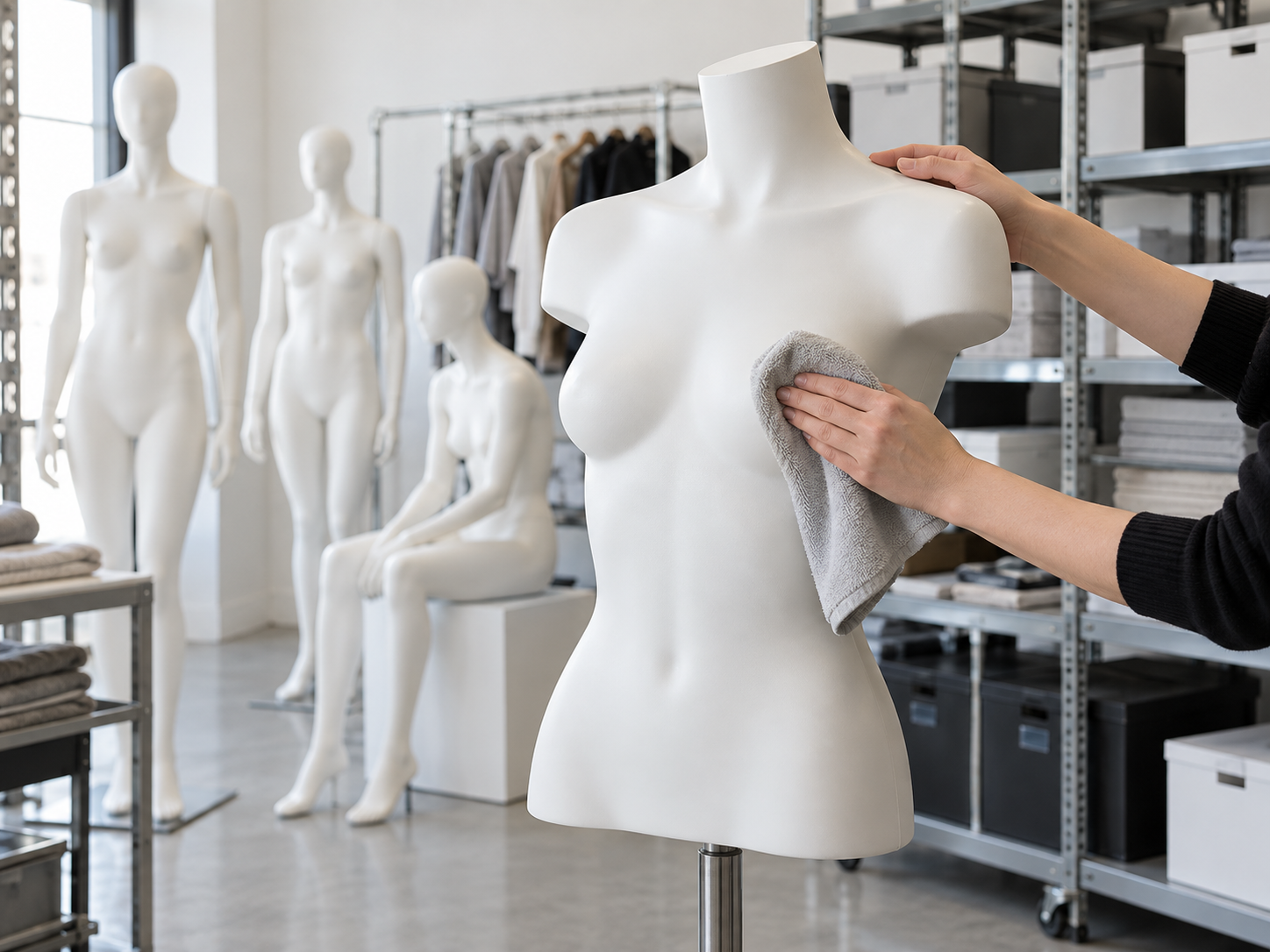
Begin with ordinary dust removal using a clean, soft cloth where the supplier permits it. Before adding liquid or a cleaning product, check the finish instructions. Test any approved treatment in an inconspicuous area, then inspect it under the shop's lighting. If the surface changes appearance, stop and ask for advice.
Avoid improvising with household solvents, abrasive tools, or strong scrubbing. A stubborn mark is a reason to identify the finish and the cause, rather than to keep increasing pressure. Record the product used if a mark appears during cleaning.
Follow a repeatable inspection sequence
First, remove the garment and accessories carefully. Support detachable parts while releasing their fittings, following the model's assembly method. Put small components in a labelled container so they cannot disappear into clothing or packing material.
Next, inspect the figure in good light. Look at contact points, hands, the base connection, and areas normally covered by garments. Photograph new chips, cracks, or loose fittings before doing anything else. Separate cosmetic observations from structural concerns so the supplier can understand what needs checking.
Then carry out only the routine cleaning the instructions allow. Let any permitted damp-cleaned surface dry before packing it. Finally, check that the matching stand, support, and detachable parts are present. This order makes the next installation easier because condition and completeness are checked together.
Stop and inspect a difficult joint
A joint that no longer connects normally needs inspection. Check whether something obvious, such as garment fabric or loose packing material, is obstructing the connection. Use the instructions to confirm its orientation. Do not force it, alter the fitting, or apply a lubricant simply because another mannequin uses one.
Keep the part and its matching figure together, photograph the connection, and contact the supplier with the model details. The same principle applies to a loose or unstable support. Take the figure out of the display until the problem has been assessed and the support can be used as intended.
This is especially useful for teams sharing a mannequin fleet. A short fault note prevents the next shift from repeating an unsuccessful assembly attempt or mistaking a known issue for missing technique.
Organise storage around the next installation
Use the manufacturer's packing or storage arrangement where it is available. Support parts so they are not pressing against delicate projections or scratching one another. Keep matching hands, limbs, and fittings clearly labelled with the figure they belong to. A protected, identifiable set is more useful than a tightly packed box that nobody can assemble confidently.
Choose a clean storage location and avoid placing figures where they will be knocked during stock handling. Check the supplier's guidance for moisture, heat, light, and coverings. Do not assume that upright storage, wrapping, or dismantling is universally correct for every design.
Put the next-use date on the storage record when you know it. Keep figures needing attention in a separate, clearly marked area so they are not accidentally selected for an event or shop-floor reset.
Use a practical handover after each campaign
For example, a shop changing from occasionwear to casual clothing could check all the figures as the old outfits come off. One staff member records the condition, another confirms the next campaign's required poses and bases, and any incomplete set is resolved before installation day.
The useful output is a short handover: which figures are ready, which need supplier advice, and which accessories belong with each one. Avoid predicting a fixed lifespan from a quick clean. Good care is a repeatable way to spot issues, protect finishes, and keep the display process organised.
Know when replacement is the better conversation
If a figure cannot be supported reliably, has an unresolved damaged fitting, or no longer suits the garment you want to show, ask about the available options. A replacement part, supplier repair, different model, or new figure may each be appropriate. Describe the actual issue and intended use so the recommendation addresses the display's next job.
Compare relevant options for this display
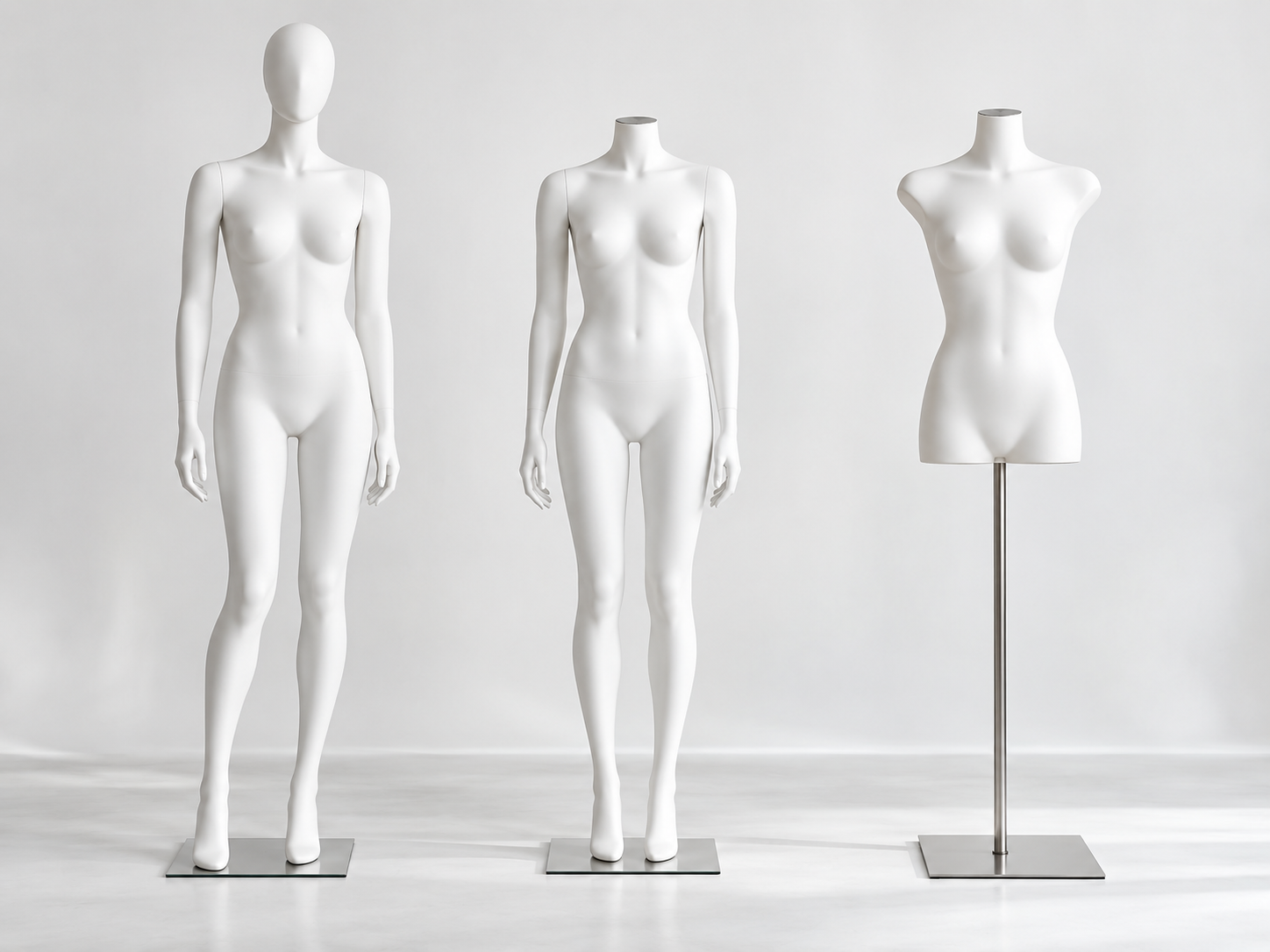
Our white female torso dress form rental is listed for displaying tops and accessories. If you are enquiring about it, ask for the supplied support and its permitted care method. Do not assume that the fabric appearance means it can be soaked, machine washed or pinned.
Our female full-body mannequin rental listing presents standing-pose options, with the actual pose confirmed separately. Ask what parts and support accompany the selected model and how those parts should be handled or packed. Request the assembly instructions for the supplied figure.
| Current option | Check for your display |
|---|---|
| White Female Torso Dress Form Rental | Upper garment or accessory: confirm the surface, stand and supplied parts. |
| Female Full-Body Mannequin Rental — Standing Poses | Complete outfit: confirm the pose, garment fit and dressed footprint. |
Questions before you decide
Can I use household glass cleaner or alcohol wipes?
Ask about the finish first. Confirm the model and its approved cleaning method before choosing a chemical. Follow the selected item’s care instructions and raise a stubborn mark with the supplier.
Should every mannequin be stored upright?
Storage depends on the model, its components and the approved packing. Confirm how the actual figure should be packed; a single rule would not cover every full-body figure or torso support.
For a shop or event team sharing a mannequin set, record which figures are ready, which need supplier advice and which parts belong together before the next handover.
Turn your shortlist into a quote
Send the relevant product codes and quantities with your location, required dates and any delivery or collection requirements. Ask what the quoted selection includes before confirming.
Use our contact page to ask about the product or rental you’re considering before you decide.