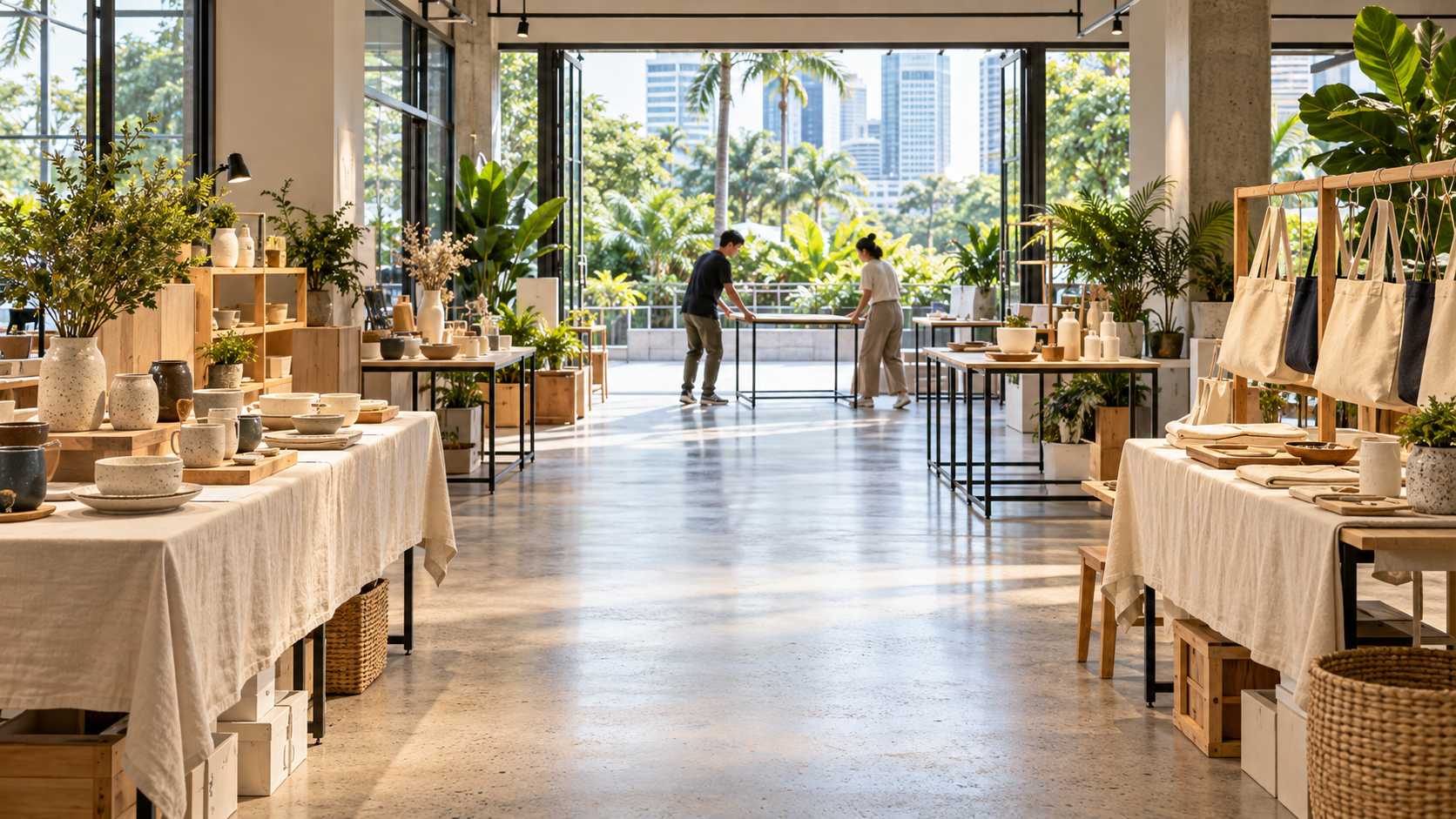
Featured image is an AI-generated editorial illustration, not a photograph of an actual event or identifiable venue.
Build your pop-up run sheet backwards from opening time. Confirm when the venue lets you in, give each setup task an owner, and leave time to check the finished space before customers arrive.
The useful question is whether every delivery and installation fits that window. A supplier arriving on time still leaves you with a problem if the lift is booked or nobody can receive the items. Settle those handoffs before booking equipment.
Confirm how the space can be used
Tell venue management what you plan to do, how many booths or stations you expect and what equipment will be present. Include anything involving food, sound, electricity, structures or demonstrations. Ask which activities the venue accepts and what documents or approvals it needs.
Singapore’s SCDF guidance on temporary change of use covers specified activities and includes exemptions. The applicable requirements depend on the venue and setup. Ask management to review your proposed arrangement against current guidance rather than assuming every pop-up follows the same approval route.
Obtain a usable floor plan and confirm entrances, fixed obstructions and areas that must remain clear. Record the authorised setup, trading and removal periods separately. Access to an empty space before the public opening is part of the booking you need to understand.
Walk the loading route on paper
Map the journey from the vehicle unloading point to the final booth position. Ask about loading bays, lift booking, vehicle restrictions, security registration and any shared access. Confirm who provides trolleys or labour when items need moving beyond the unloading point.
Give suppliers the route details that affect their delivery. Dimensions, stairs and tight turns matter more than a broad description such as “easy access”. If a route has not been checked, flag that uncertainty early so someone can measure or photograph it.
For an illustrative multi-booth event, compare a shared delivery window with staggered arrivals. A shared window needs enough unloading space and receivers for several vendors. Staggering arrivals can reduce competition for a lift, but each vendor must have enough time left to set up. Choose using the actual route and delivery sizes.
Assign an owner to each handoff
List the tasks involved in making the space ready: receiving items, assembling furniture, setting signs, connecting approved equipment and preparing stock. Give each task an owner. A named person is more useful than “the team”, particularly when a supplier arrives before the organiser.
Define what a completed handoff looks like. The receiving person might check quantities and condition, photograph an issue and direct the delivery to the correct booth. The installation owner then confirms that the items are assembled and ready for use.
Keep a shared contact sheet with the organiser, venue contact and relevant suppliers. Include who can approve changes. Limit personal contact details to the people who need them, and provide a simple way for staff to reach the responsible person during setup.
Plan power and operating needs early
List the equipment that needs power and ask the venue how it should be connected. Include payment devices, lighting, refrigeration or display screens when relevant. Let the venue or appropriate provider confirm capacity and cable arrangements; do not treat an available socket as proof that your entire setup is suitable.
Think through connectivity and payment as operating tasks. Confirm what the payment system needs and test it in the agreed location. Prepare a process for an interruption that suits your business, then explain it to staff before the first customer arrives.
Allocate practical support areas too: packaging, empty cartons, personal belongings and waste. A booth plan that fills every corner with display equipment leaves staff to improvise storage. Agree where these items belong and how they will be cleared during the event.
Build the run sheet around dependencies
Work backwards from the public opening. Schedule the final inspection, staff briefing and payment test before that point. Earlier tasks should follow their dependencies: furniture needs placement before stock is arranged, and approved power connections need completion before powered equipment is tested.
Give the run sheet four useful fields: time, task, owner and completion check. Include access details where they matter. “Delivery received and counted by booth lead” is clearer than “equipment arrives”. Use realistic timing based on confirmed supplier and venue information.
Leave room for correction. A final check is useful only if there is time to move a misplaced table or replace a missing sign. Decide which issues must be fixed before opening and who has authority to make that call.
Rehearse closing before opening
Plan the customer closing announcement, payment cutoff and stock count alongside dismantling and collection. Confirm whether suppliers collect immediately or later, and who remains responsible for hired equipment until handover.
Label reusable parts and keep protective packaging accessible. Check the venue’s requirements for waste removal, surface condition and returning access passes. Take photographs where they help document the handover, especially if several teams share responsibility for the space.
Send the final run sheet and layout to everyone performing the work. Ask each person to confirm their task and flag a timing conflict before event day. Keep the latest version together with the access details and supplier contacts.
For display equipment, turn that plan into a rental brief: item types, quantities, event dates, and the agreed delivery and collection windows. Browse Asia Mannequin’s rental range and request confirmation of the exact equipment and price for your setup.