


Height and space sell jewellery. Lift every piece off the counter: necklaces on busts, rings and earrings on stepped risers, and leave clear room around the pieces you most want to sell. A flat tray hides jewellery. A stand gives each piece its own stage.
Everything below is about putting those two ideas to work on a real counter: which stand suits which piece, how to group, and how to keep the whole display reading as one shop rather than a market table.
The usual problem. A shop lays forty pieces flat in one glass tray. Every piece sits at the same level, the chains tangle, and the customer’s eye slides across the lot without landing anywhere. Shoppers do not study flat trays. They stop at whatever stands up, and in that tray nothing does.
Why Flat Trays Fail
Jewellery is small. Laid flat, a ring is a dot and a necklace is a line, and from a standing customer’s angle both are foreshortened to almost nothing behind the counter edge. Flat also means equal: when every piece sits at the same height, no piece is the hero, so the display makes no argument about what to look at first.
Height fixes both problems at once. A raised piece meets the customer’s eye, catches the light on its own, and quietly outranks its neighbours. Every technique in this guide is a way of adding height with intent.
Necklaces Want a Neck
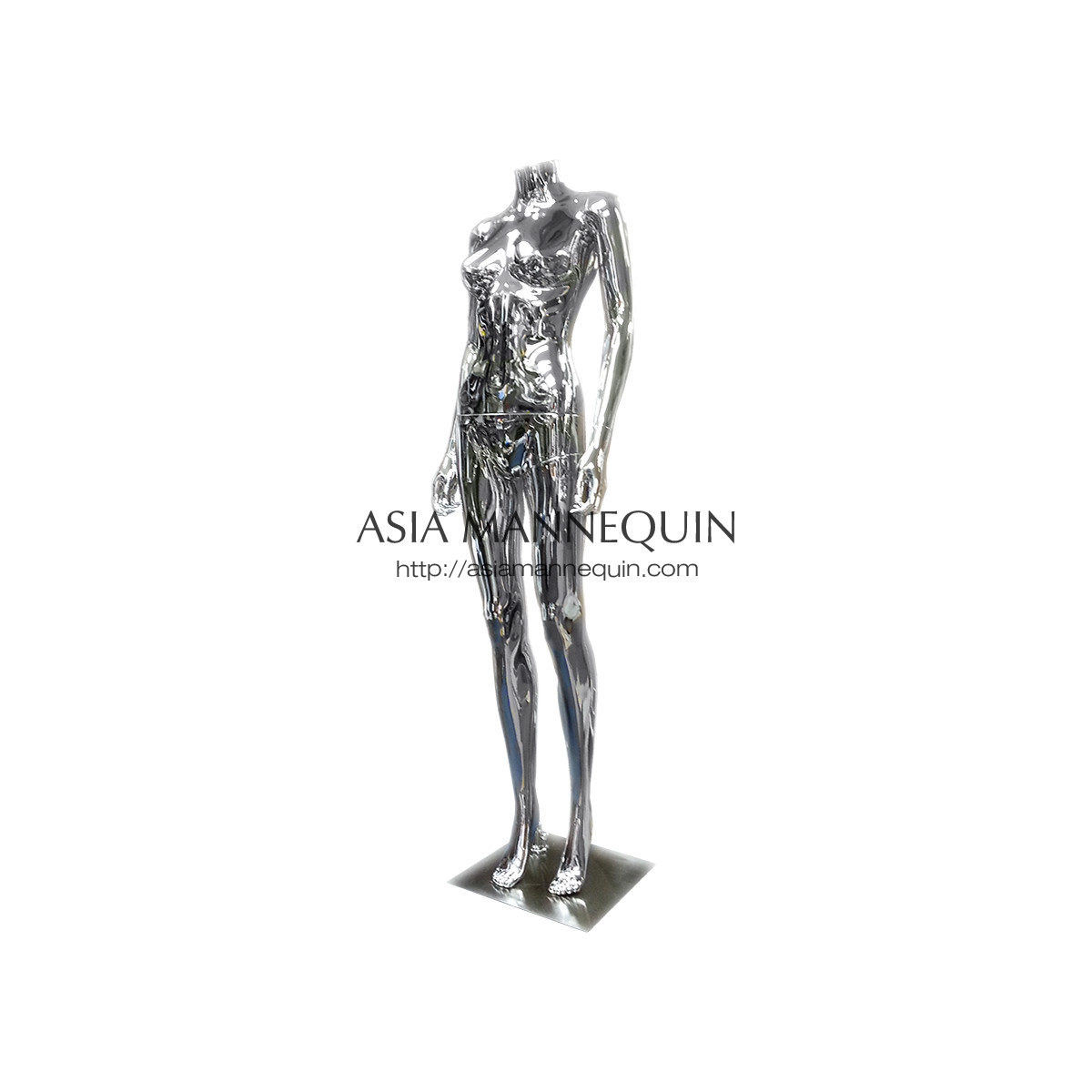
A necklace makes sense on a neck. On a bust or a necklace stand, the chain falls the way it will fall when worn, the pendant sits where it will sit, and the customer can picture it instantly. Coiled in a tray, the same necklace is a puzzle.
Match the stand height to the chain length. A short chain or choker suits a small bust, where the chain hugs the neckline. A long chain or pendant wants a taller stand so the drop can hang free without pooling at the base. If a pendant lies on the counter at the bottom of its stand, the stand is too short.
Give your best necklaces a stand each. One chain per bust reads as considered. Three chains layered on one bust reads as storage, and the customer has to untangle them with their eyes before deciding whether to care.
Rings and Earrings Need Steps
Small pieces disappear on a flat surface, so give them levels. A stepped riser, a set of blocks in mixed heights, or a small tiered stand turns a scatter of rings into a display with a front row, a middle, and a peak.
The top step is the seller. Put the piece you most want to move on the highest level, closest to eye line, and let the supporting pieces fill the lower steps. When that piece sells, promote another. The habit takes seconds and keeps the counter making an argument all day.
Earrings earn their own stands too. A card leaning in a tray shows the design flat and dull. An earring stand holds the pair upright at the angle they hang from an ear, which is the angle the customer is buying.
Pick One Material Story
Display materials talk, so make them say one thing. Clear acrylic is the quiet worker: it all but disappears, keeps the eye on the metal and stone, and suits bright, modern counters. Velvet is the soft option: it holds pieces still, feels plush, and flatters gold and warm tones. Wood and copper accents bring warmth to craft and heritage brands.
Any of these can carry a whole shop. What does not work is all of them at once. A counter that mixes clear acrylic, red velvet, bare wood, and chrome reads like a flea market table, and the jewellery inherits that reading. Choose one main material, allow one accent, and stop.
Colour follows the same rule. Black velvet makes pale metals and diamonds jump forward. Cream and grey flatter warm gold. Whichever you choose, repeat it across the counter so the display reads as one hand at work.
Group in Odd Numbers, Leave Space
Groups of three sit more naturally in the eye than pairs or straight rows. A tall stand, a medium riser, and a low block make a small scene with a skyline, and the eye travels through it instead of past it.
Then leave space. Empty counter around a piece is not wasted counter. It is the frame that tells the customer this piece deserves a look. The more a piece costs, the more space it should own. Crowd the display and you flatten it back into the tray you were escaping.
Work the Heights of the Shop
Think in three zones. Eye level, roughly where a standing customer’s gaze lands, is for the hero pieces on their tallest stands. Counter level is for browsing: the stepped risers, the ring blocks, the sets a customer can lean over and compare. Below the glass, inside the counter, is depth: the rest of the range, still tidy, still on low risers rather than flat.
Walk into your own shop as a stranger once a week and follow your eyes. Wherever they land first is your prime spot. Make sure the piece standing there deserves it.
A Counter Setup That Works
- One bust or tall stand as the hero, one necklace on it, space around it.
- A stepped riser beside it with rings or earrings in groups of three.
- One material story across the whole counter, one accent at most.
- Chain lengths matched to stand heights, one chain per stand for the best pieces.
- The piece you most want to sell on the highest step, swapped as it moves.
Start with that one counter. Once it earns its keep, repeat the pattern across the shop, and keep the tray for the stockroom.
A stage for every piece
Browse the jewellery display range below, add what fits to your quote, and tell us about your counter. We have dressed Singapore jewellery counters for over a decade.


